
Restaurant Chair Cushions: Fabric, Cleaning & Color
Specify restaurant chair cushions by fit, compressed seat height, stability, abrasion evidence, approved cleaning chemistry, fire review and lifecycle cost.

A restaurant chair cushion has to fit the chair and table, stay secure as guests move, tolerate the approved cleaning routine and meet the fire requirements that apply to the project. Colour is important, but it comes after those checks.
This guide gives an enquiry list, sample-test plan, inspection routine and cost formula for a room-wide order. Built-in seating is a different construction with different upholstery decisions; see our banquette seating guide.
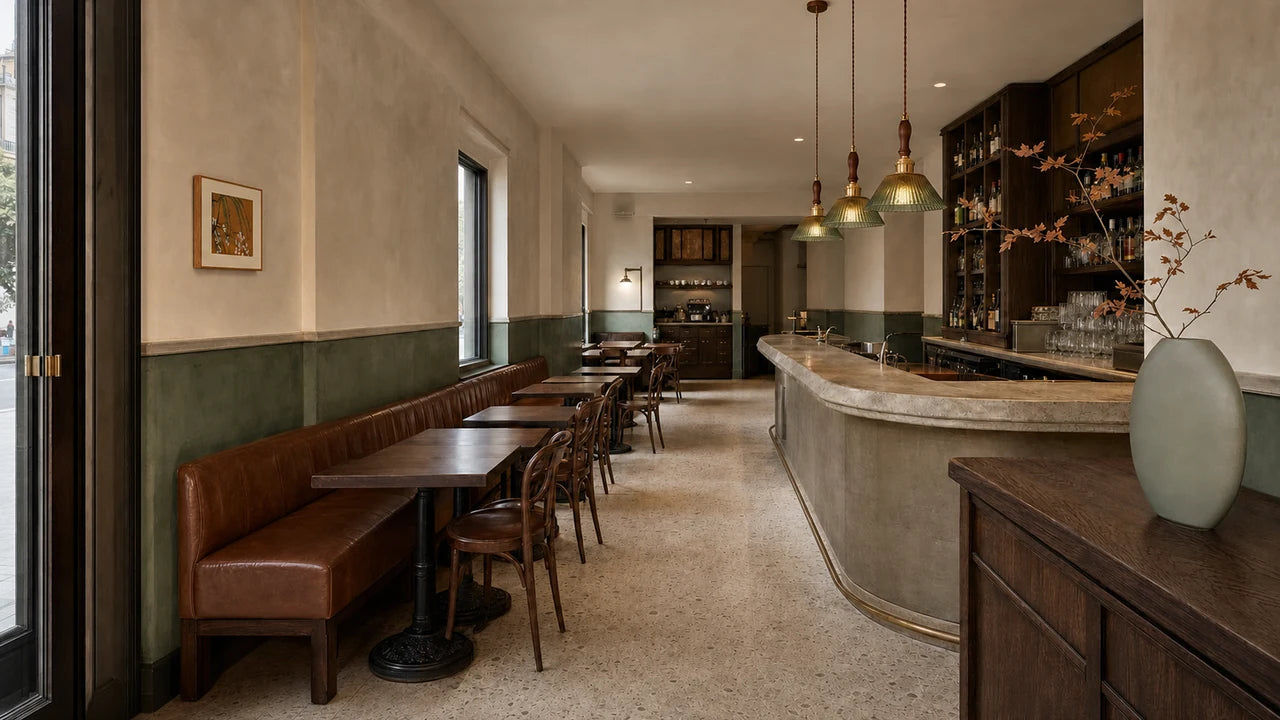
Why residential cushion advice fails in a restaurant
Estimate use from seats × turns × trading days, then add the actual spill and cleaning routine. That produces a more useful brief than the word "commercial." A product page may show a restaurant photograph without publishing abrasion, seam, foam, chemical or fire data, so request those documents directly.
The five specs to ask a supplier for
Copy this into the next enquiry email. If the supplier cannot answer an item, record it as unknown rather than filling the gap with a category assumption.
- What is the abrasion rating, by which test, and does it carry ACT's high-traffic designation? Abrasion is measured by Wyzenbeek (double rubs, common in North America) or Martindale (cycles, common in Europe), and the two are not interchangeable — ask which produced the number. The Association for Contract Textiles publishes voluntary performance guidelines covering abrasion for low- and high-traffic use, alongside flammability, colourfastness, crocking and physical properties. Ask for the high-traffic designation rather than the biggest number available: ACT itself cautions that results above its high-traffic guideline have not been shown to indicate longer service life.
- What cleaning method and chemicals are approved? Some suppliers use W, S, WS or X cleaning codes, but the code does not replace the product's own instructions or establish compatibility with the restaurant's cleaner. Ask for the named product type, dilution, method, rinsing and drying limits in writing.
- What are the foam specification, compressed seat height and recovery data? Density alone does not describe comfort or durability. Ask for the foam type, density, firmness or indentation data, thickness, construction and any relevant durability test, then compare the complete cushion rather than one number.
- What fire-performance testing has it passed? California TB 117-2013 is the reference most manufacturers quote, but requirements for public assembly seating are set locally. Ask what the fabric and the fill have each been tested to, then confirm what your own authority having jurisdiction requires — a question for your fire marshal and your insurer, not a product page.
- Are covers and fills replaceable separately, and for how long? Ask for the reorder reference, minimum quantity, colour-lot policy and care instructions. A removable cover is useful only if replacements remain available and the closure survives service.
Fabric by fabric
| Fabric family | What to inspect on the sample | Cleaning question | Common trade-off | Candidate use |
|---|---|---|---|---|
| Performance velvet | Pile change on the front edge, seam wear and directional shading | Which cleaner, brush and stain method does this finish require? | Texture can show crushing or pressure marks | Evening room after abrasion and chemical review |
| Coated fabric / faux leather | Seam flexing, surface cracking, colour transfer and heat comfort | Which cleaner and disinfectant are approved, and for what contact time? | Easy wiping may trade off against surface ageing or comfort | High-cleaning-frequency room if the coating is documented |
| Bouclé or looped weave | Snagging from clothing and bag hardware | Can the exact weave be spot-cleaned without distortion? | Strong texture can increase snag and soil-retention risk | Protected, lower-contact application |
| Canvas or cotton duck | Seam abrasion, shrinkage and colour change after laundering | Is the cover removable, pre-shrunk and machine washable? | Replaceable and familiar, but product performance varies | Daytime room after wash test |
| Solution-dyed performance fabric | Seam construction, backing and water retention | Is the complete cushion rated for the intended indoor or outdoor exposure? | Fibre claims do not automatically cover foam, zip or thread | Bright or damp-prone zone only when fully rated |
| Linen or linen blend | Creasing, seam movement and stain release | What professional or in-house cleaning method is approved? | Natural hand with potentially higher care demand | Room with a workable cover and laundry plan |
Performance velvet
"Performance" needs a specification behind it. Ask for abrasion, seam, colourfastness, cleaning and fire data for the exact colour and backing. On the sample, compress and rub the front edge, clean a standard test mark according to the instructions and inspect it under service lighting after it dries. Pile direction and pressure marks may be more visible than on a flat weave.
Vinyl and faux leather
Coated fabrics can provide a smooth cleaning surface, but coating chemistry, backing, seams and plasticiser migration vary. Flex the sample at the stitched edge, test the approved cleaner and inspect for colour transfer, tackiness or cracking. A thicker face is not automatically a better complete cushion.
Bouclé and textured wool
Looped textures can catch jewellery and bag hardware. Test the exact weave with ordinary clothing and cleaning tools, and ask how pulls are repaired. A protected back panel may be a lower-risk use than the front edge of a removable seat pad.
Canvas, acrylic and linen
For canvas, solution-dyed fabrics and linen blends, test the complete cover rather than relying on the fibre name. Wash or clean the sample exactly as staff will, then check shrinkage, seam twist, colour change, hand and fit on the foam. For outdoor or damp-prone use, every component — face, backing, thread, closure and fill — needs an appropriate exposure rating.
The cleaning protocol you can hand to staff
Unapproved cleaning can damage a cushion as quickly as a spill. Build the routine from the supplier's instructions and the restaurant's hygiene requirements, then put the approved product and method on the closing checklist.
Each service day. Inspect the seat, underside, ties or grip layer and the seat-back gap. Follow the product-specific spill method; some fabrics are blotted, some wiped and some require professional cleaning. Remove any cushion with a wet fill, damaged seam or unstable attachment from service.
On a set rotation. If the cushions and colours are interchangeable, rotate high-use and lower-use positions and flip only products designed to be reversible. Record the starting position so uneven wear and fading can be identified rather than hidden.
At the supplier's maintenance interval. Launder or deep-clean only as permitted. Inspect zips, seams, ties, non-slip backing, foam condition and fit while covers are off, and keep enough approved spares to isolate a damaged unit.
Chemical rule. Do not apply a disinfectant, solvent or stain remover unless the cushion maker approves the exact chemistry and method. If the operating protocol requires disinfection between covers, make that a pass/fail criterion during product selection and test the complete seam and coating system.

Thickness, fit and table clearance
Do not use cushion discomfort as a turnover-control strategy, and do not assume softness produces a predictable dwell-time result. Choose for safe, appropriate seating and evaluate service pace separately.
A cushion raises the effective seat height and can reduce clearance below the table apron. It can also slide, interfere with the chair back or extend beyond the seat pan. Before a bulk order, put one sample on every chair type, have people of different sizes sit through a normal meal, and check compressed seat height, table clearance, front-edge pressure, stability and transfer in and out of the chair.
Colour-matching without matching
Pull the cushion colour from a secondary colour in the room — a tone in the art, the tile, the signage, the bar front — rather than the dominant one. Matching the dominant colour flattens a room; echoing a secondary colour ties it together. The same logic makes a good tablecloth-and-runner pairing work, and it scales all the way up to the wall.
Colour does not predict cleanability. On the sample, apply the same measured test soil, clean it by the approved method and inspect the dried result under day and night lighting. Deep tones may conceal some marks while revealing lint, pile change or chemical residue; pale colours may reveal soil sooner. Choose from evidence rather than the swatch alone.
Test swatches under the actual lights, at night, in the room. A neutral under showroom daylight can shift under a warm source, and pile direction can change its apparent lightness. Attach the shortlist to the chair, photograph it through a full lighting cycle and review it from the entrance and seats. Our lighting colour temperature guide explains the mechanism; The Rosewater Patisserie shows a pastel-led concept where small shifts matter.
Cost per seat per year
Cushions are paid for through purchase, cleaning, repairs, spares, storage and replacement. Compare candidates over the same planning period with your own quotes and observations.
cost per seat over the comparison period = (delivered units + spare covers/fills + cleaning labour + repairs + storage + disposal − residual value) ÷ seats in service
Use the same period and service assumptions for every candidate. Where covers and fills are replaceable separately, model those purchases separately and include minimum order quantities, colour-lot risk and the labour to remove, clean and refit them.
Do not invent a useful life from the unit price. Use supplier warranty or service evidence where available, then record wear during the sample trial and set a replacement trigger for foam recovery, fit, seam condition, attachment and cleanability.
The picks we reach for
Our current velvet shell cushion listing describes a domestic lounge or back-support pillow with shredded memory foam. It does not publish the contract abrasion, seam, cleaning-chemistry or fire evidence this guide asks for. Treat it as a visual reference or domestic product, not a room-wide restaurant-seating recommendation unless the supplier provides the missing documents and a sample passes the full trial.
For the colour mock-up, compare the cushion with the actual table surface and one nearby wall element. A cotton-linen tassel tablecloth and tassel wall tapestry are visual references, not contract-upholstery substitutes. The Juniper Brasserie, Warm & Intimate and Soft & Sculptural offer palette concepts to test under the real room lighting.
For a room-wide order, trade projects can work from the chair schedule, sample requirements, documented colour reference, approved cleaning chemistry and spare-cover quantity.
Restaurant chair cushion FAQ
What fabric is best for restaurant chair cushions?
There is no best fibre name without the complete construction. Compare abrasion test and ACT designation, seam and backing performance, approved cleaning chemistry, fire evidence, compressed fit and exposure rating for the exact colour. Then run the same sample test on velvet, coated fabric or a flat weave before ordering.
How do you clean restaurant chair cushions?
Inspect the seat, underside and attachment each service day. Respond to spills only by the supplier's written method, and remove a wet, damaged or unstable unit. Rotate only interchangeable products at a recorded interval; deep-clean or launder only when the care instructions permit it. Never substitute an unapproved chemical or application method.
Are velvet chairs practical for restaurants?
Possibly, when the exact velvet publishes suitable abrasion, colourfastness, cleaning and fire evidence and the completed cushion passes the trial. Inspect pile change and front-edge wear, test the approved cleaner on a standard mark, and review the dried sample under service light. Do not infer chemical compatibility from the word "performance."
How thick should a restaurant seat cushion be?
Choose thickness from the chair and table together. Measure compressed seat height and clearance below the table apron, then test front-edge pressure, stability and transfer in and out with people of different sizes. A catalogue thickness alone cannot establish comfort or fit.
How often should restaurant cushions be replaced?
There is no universal cycle. Set documented triggers for foam recovery, compressed fit, seam or zip damage, unstable attachment, surface wear and marks that no longer respond to the approved method. Replace a cover or fill separately only when the supplier allows it and the remaining component still passes inspection.
Keep reading

guest-experience
Restaurant Restroom Cleaning Checklist and Inspection Log
Use this restaurant restroom cleaning checklist for opening, service inspections, supplies, fixtures, floors, waste, incidents, and closing records.

dining-room-operations
Restaurant Dining Room Cleaning Checklist: Turn to Close
Use this restaurant dining room cleaning checklist for table turns, high-touch points, spills, service stations, floors, opening, and close.

food-safety
Restaurant Kitchen Cleaning Checklist for Every Shift
Use this restaurant kitchen cleaning checklist to control opening, between-task, four-hour, closing, and weekly work without vague assignments.