

By Kamrul Hasan Rayhan · Published 3 August 2026 · Last updated 3 August 2026
A fall patio changeover is easier when it begins with an operating audit, not a shopping list. Shorter daylight, wind, temperature, and local rules change on different schedules, so a single national install date is not enough.
The ten moves below are ordered by dependency: measure the darker service, test the table-lighting fleet, review wind and storage, then decide what to buy. The planning example uses Labor Day—Monday, September 7, 2026—as a checkpoint, but your climate, permits, and supplier dates should set the actual calendar.
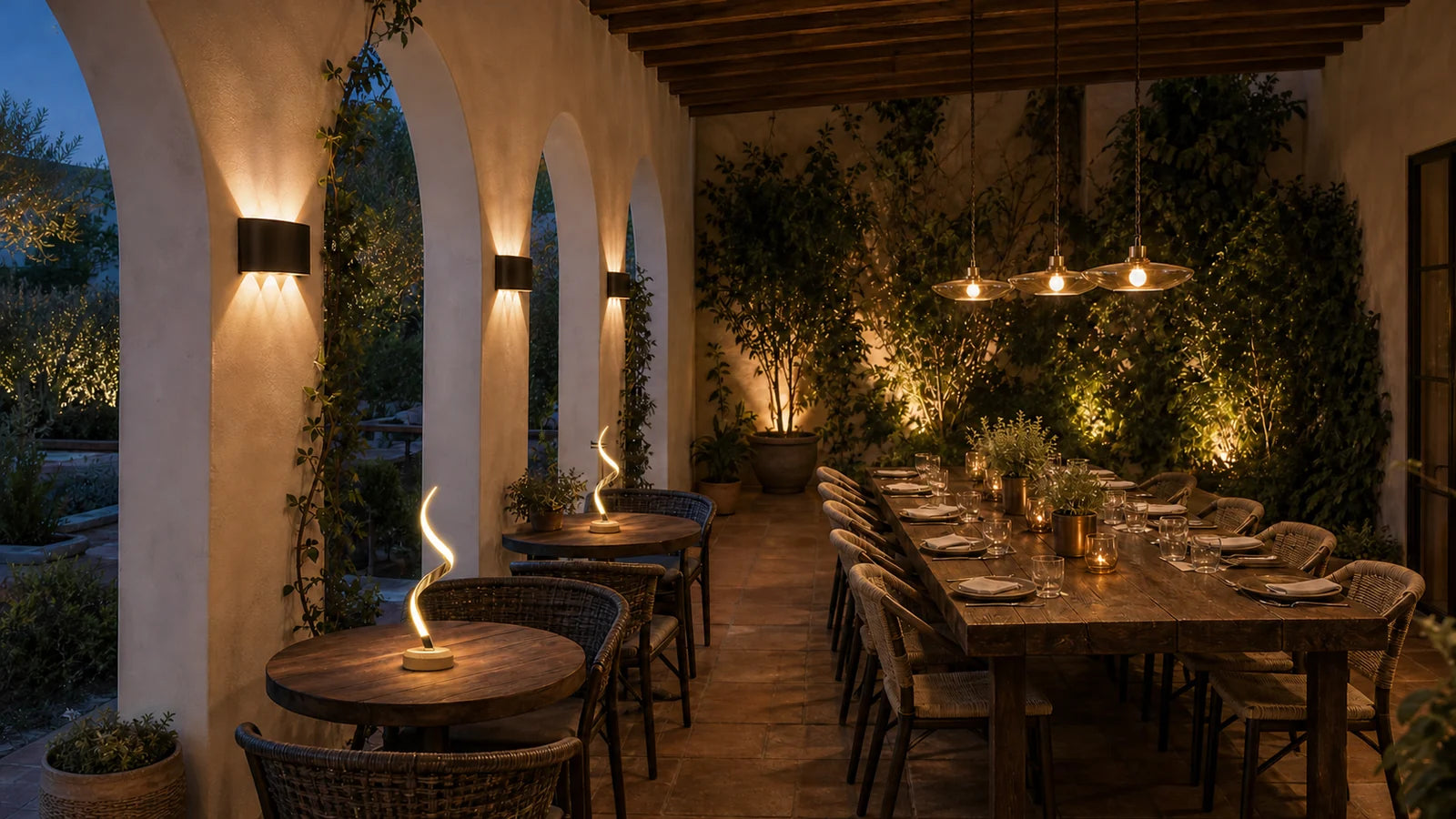
The 10 moves at a glance
- Re-lamp for a darker dinner service — warmer, lower output before the temperature changes at all.
- Pilot portable lamps at the tables that need them before sizing a fleet.
- Change the palette, not the props — amber, rust, olive and oat in linens instead of pumpkins.
- Retire summer florals for branches and warm-tone arrangements in weighted vessels.
- Audit textiles separately from heat — storage, moisture, fire and cleaning first.
- Wind-test the whole tabletop — stable, low and clear of sightlines.
- Review enclosure as an approved project — wind, egress, fire and permits govern.
- Re-map table demand as daylight changes without narrowing required routes.
- Give the patio one reason to exist after dark — a single lit focal point.
- Build the calendar backward from approvals, samples, supplier dates and useful service weeks.
For the lighting audit, use Top 10 Patio Lighting Ideas Before Summer Ends. The underlying method—layers, mounting, exposure and glare—lives in the restaurant patio lighting guide.
1. Re-lamp for a darker dinner service
Audit the patio at the current dinner time and again at full dark. Record menus, faces, routes, steps and boundaries that no longer meet the intended or required light condition; do not estimate the change from memory.
Before changing lamps, confirm fixture base, voltage, wattage limit, dimmer compatibility, enclosure and exposure rating. Test one decorative or "fireworks" bulb at dusk and full dark for colour, output, beam and glare, then document the approved reference by zone and buy compatible labelled spares. Our lighting colour temperature guide explains the visual trade-offs.
2. Pilot portable lamps before sizing a fleet
Rechargeable touch table lamps can put light directly on the table without a permanent wiring run. Confirm that the exact product is suitable for the exposure, stable on the table, and able to run through service at the chosen setting; local rules may still apply to outdoor equipment and charging arrangements.
Test run time at the approved output across a full service. Define a charging location allowed by the manufacturer, deployment and return counts, cleaning, damaged-battery isolation and storage away from prohibited heat or moisture. Size the fleet from the tables that fail the light audit plus observed spares—not automatically every table.
If the test works, ask the supplier to confirm availability for the full quantity plus your documented spare requirement. The operating specs to verify are covered in our rechargeable table lamps guide; browse table lamps only after the fleet plan is clear.
3. Change the palette, not the props
Colour can signal the change without adding fragile novelty props. Use a three-colour formula: one warm base, one earth mid-tone, and one accent. Amber, olive, and rust can work; so can oat, rust, and ink. Test the palette at midday and under the patio's night lighting before buying the full textile count.
Test the palette on one cotton-linen tablecloth or runner and any existing mats before ordering. Exterior textiles need documented exposure and care limits; colour alone does not establish outdoor suitability.
Two operator notes. If colour consistency matters, confirm dye-lot availability before ordering. Build textile par from tables in use, likely service changes, laundry turnaround, and a reserve based on actual stain and damage history.
4. Retire summer florals for branches and warm-tone arrangements
Review existing arrangements for condition, colour fit, wind stability and storage rather than replacing them solely because the month changed.
For a visual trial, compare peach-blossom branches at a protected host position with lower artificial arrangements on tables. Use glazed ceramic vases only after verifying exact weight, base stability, chip condition, finish, exposure and restraint. Test the complete arrangement in the actual wind zone.
Compare delivered cost, cleaning, storage, fading, damage and replacement with the venue's current fresh-floral programme. Artificial stems do not have a universal one-season payback. The arrangement principles carry over from our floral arrangements guide.
5. Audit textiles separately from heat
Textiles may change the visual character and contact comfort of a patio, but they do not replace a thermal-comfort or heating assessment. Treat visual styling and actual temperature as separate briefs.
Specify only cushions, linens or wall textiles whose complete construction is approved for the exact exposure, cleaning and fire requirements. “Under cover” is not an outdoor rating. Resto Glow's current velvet shell listing publishes no contract or exterior evidence and should not be used for a patio fleet without additional documentation and testing.
Before ordering portable textiles, define dry storage, collection time, container, inspection and cleaning. Assign the routine by shift and remove damp or damaged goods from service instead of sealing them into storage.
6. Wind-proof the whole tabletop
Map wind exposure by table and review tall, light or unrestrained objects before the seasonal change. Include menus, vessels, lamps, signs and textiles.
Keep the complete centre cluster below the tested seated sightline and stable in its real exposure; there is no universal twelve-inch rule. Compare squat glazed ceramics, enamel or glass vases, decorative trays and wide-base cordless lamps by documented weight, slip, edge condition and failure consequence.
Use a controlled test that does not expose guests to a failing object. If an item slides, tips, lifts or makes service awkward, remove it from that zone and revise the specification.
7. Enclose in stages, not all at once
Screens, curtains and heat can change wind load, egress, ventilation, fire conditions, accessibility and permits. Treat enclosure as a project reviewed by the appropriate professionals and authorities, not a décor sequence.
Model the proposed stage against real conditions and demand. Source screens, curtains and heating from qualified suppliers, obtain approvals, protect required routes and ventilation, and commission each system before service.
A newly sheltered wall is not automatically suitable for indoor fixtures or décor. Verify exposure, structure, projection, fire and fixing for wall sconces, wall-mounted shelving or vintage tin signs. The Courtyard Supper Club is a mood reference only.
8. Move the good tables to follow the sun
Daylight, shade, wind and guest demand can change by table as the season moves. Re-map occupied conditions during the actual service window rather than relying on the summer seating chart.
Before moving furniture, preserve approved capacity, accessible routes, egress, clearances and service paths. Then adjust portable, verified décor to the new table plan and update the host map.
Update the host map, table notes and portable-light deployment together so the team uses the approved seasonal plan consistently.
9. Give the patio one reason to exist after dark
A lit focal point can improve visual depth, but it does not replace required route and table lighting. Test one composed position before buying multiple decorative elements.
Possible mock-ups include a secured wall-mounted shelf, a planted vessel with an appropriately specified sconce, or a canvas or vintage tin sign on a wall approved for that exact product. “Protected” and “under cover” still require product-specific exposure and fixing evidence.
From the entrance at full dark, photograph whether the focal point improves orientation and visual depth without introducing glare or distracting from required route lighting.
10. Build the calendar backward from the useful service window
Use Monday, September 7, 2026 as an example checkpoint only. Your useful patio weeks, climate, approvals, supplier dates and staffing determine the real plan.
Work backward through: approval, sample receipt, controlled tests, full-quantity confirmation, delivery, inspection, staff training, installation or deployment, commissioning and a contingency window. Do not assign an install week until every predecessor has an owner and current date.
Confirm the current lead time and full-quantity availability for every item before assigning it to a dated install week. Search interest does not establish supplier capacity or shipping speed.
The August → October changeover calendar
This example shows dependencies. Replace every date with current local inputs before using it operationally.
| Week | Order | Install | Verify |
|---|---|---|---|
| Aug 3–8 | Audit existing lamp fleet and textile/product evidence; request current quotes and samples | — | Night light audit, table wind map and storage capacity recorded |
| Aug 9–15 | Approve only samples that pass exposure, cleaning, stability and service tests | Build or approve charging/storage workflow | Staff owners and damaged-item isolation procedure documented |
| Aug 16–22 | Confirm full quantity, exact references, labelled spares and realistic delivery dates | Correct compatible lamps in existing fixtures through the qualified process | Colour, control, glare and run time checked |
| Aug 23–29 | Top up only from passed samples | Pilot portable tabletop and textile change on a small zone | Full-meal footprint, wind, cleaning and reset observed |
| Aug 30–Sep 5 | Release room count only if pilot and supplier dates still hold | Train deployment, return, cleaning and storage | Counts, run time and close-down log checked |
| Sep 7 (Labor Day example checkpoint) | — | Avoid unplanned work during service | Reassess demand, weather and useful operating weeks |
| Sep 8–12 | — | Roll out reversible, approved changes in a controlled window | Photograph and document final positions and control states |
| Sep 13–30 | Authorise enclosure/heat only through the full project review | Commission approved systems | Routes, ventilation, fire, glare and operating procedure signed off |
| October | Confirm winter storage and repair decisions | Close zones only under written triggers | Inventory dry, labelled and reconciled |

Product picks from Resto Glow
Sample first. Compare rechargeable table lamps, exterior-suitable textiles, artificial arrangements, branches and glazed ceramic vessels only after obtaining the relevant exposure and care information. Test exact run time, stability, cleaning, sightlines and storage before setting quantities. Do not treat the current velvet shell cushion as contract outdoor seating without missing performance documentation.
Specify by zone. Decorative bulbs in existing compatible fixtures, low vessels and trays are candidates for controlled tests. Treat wall sconces, shelving and enclosure-mounted décor as installed assemblies that require appropriate exposure, structure, projection and professional review.
Browse Warm & Intimate for visual references, or compare the concept studies The Courtyard Supper Club and The Breakwater Terrace. For several patios, trade projects can work from the zone schedule and passed samples.
Restaurant patio-to-fall FAQ
How do restaurants extend patio season into fall?
Begin with the night audit, demand and weather triggers. Pilot suitable table light where needed, verify portable textiles and storage separately, and treat screens, curtains and heat as approved projects. Extend only the zones whose operating value exceeds the installation and running cost.
When should a restaurant switch to fall decor?
There is no universal switch date. Build backward from useful service weeks, current supplier dates, approvals, sample tests, staffing and local climate. Labor Day 2026—Monday, September 7—is only a checkpoint in the example calendar.
How do you make an outdoor patio warmer in autumn?
Separate visual atmosphere, contact comfort, wind and air temperature. Lighting and verified textiles may affect the first two; screens and heaters affect building and fire conditions and require specialist design, approvals and operating procedures.
What is the best lighting for a patio in fall?
Start with required route and task light, then test overhead, perimeter and table layers. Use portable lamps only where rating, stability, glare, run time and charging pass; use permanent sconces only through the qualified specification. Our patio lighting guide covers the method.
What fall decor works outdoors without looking cheap?
Choose a restrained palette if it suits the concept, then test exact textiles, branches, arrangements and vessels for exposure, cleaning, stability and storage. A novelty object is not inherently wrong, but it should pass the same operational tests and brand review as the permanent décor.
Use the live late-summer patio lighting audit for the fixture and controls work behind this changeover.
Keep reading

guest-experience
Restaurant Restroom Cleaning Checklist and Inspection Log
Use this restaurant restroom cleaning checklist for opening, service inspections, supplies, fixtures, floors, waste, incidents, and closing records.

dining-room-operations
Restaurant Dining Room Cleaning Checklist: Turn to Close
Use this restaurant dining room cleaning checklist for table turns, high-touch points, spills, service stations, floors, opening, and close.

food-safety
Restaurant Kitchen Cleaning Checklist for Every Shift
Use this restaurant kitchen cleaning checklist to control opening, between-task, four-hour, closing, and weekly work without vague assignments.