
Restaurant Table Decor: 9 Tabletop Elements Compared
<p>A practical field test for restaurant table decor: mock the smallest table with a full order, edit every object to a clear job, time the reset, and pilot one small fleet before buying for the whole room.</p>

There is a familiar life cycle for bad restaurant table decor. It looks polished during the morning photo. At lunch it is pushed behind the salt. By dinner it has moved to the windowsill so a shared plate can land. A week later, half the pieces are in a crate beside the mop sink.
The object was not necessarily ugly. It was asked to live on the busiest square metre in the room without being tested there.
The useful question is not “What should we put on the table?” It is what deserves to stay once two guests, a real order, a server, and a reset cloth arrive? Build the answer on your smallest table, give every object one job, and time the whole setting through a miniature service before buying a fleet.

Start with the full order, not the empty table
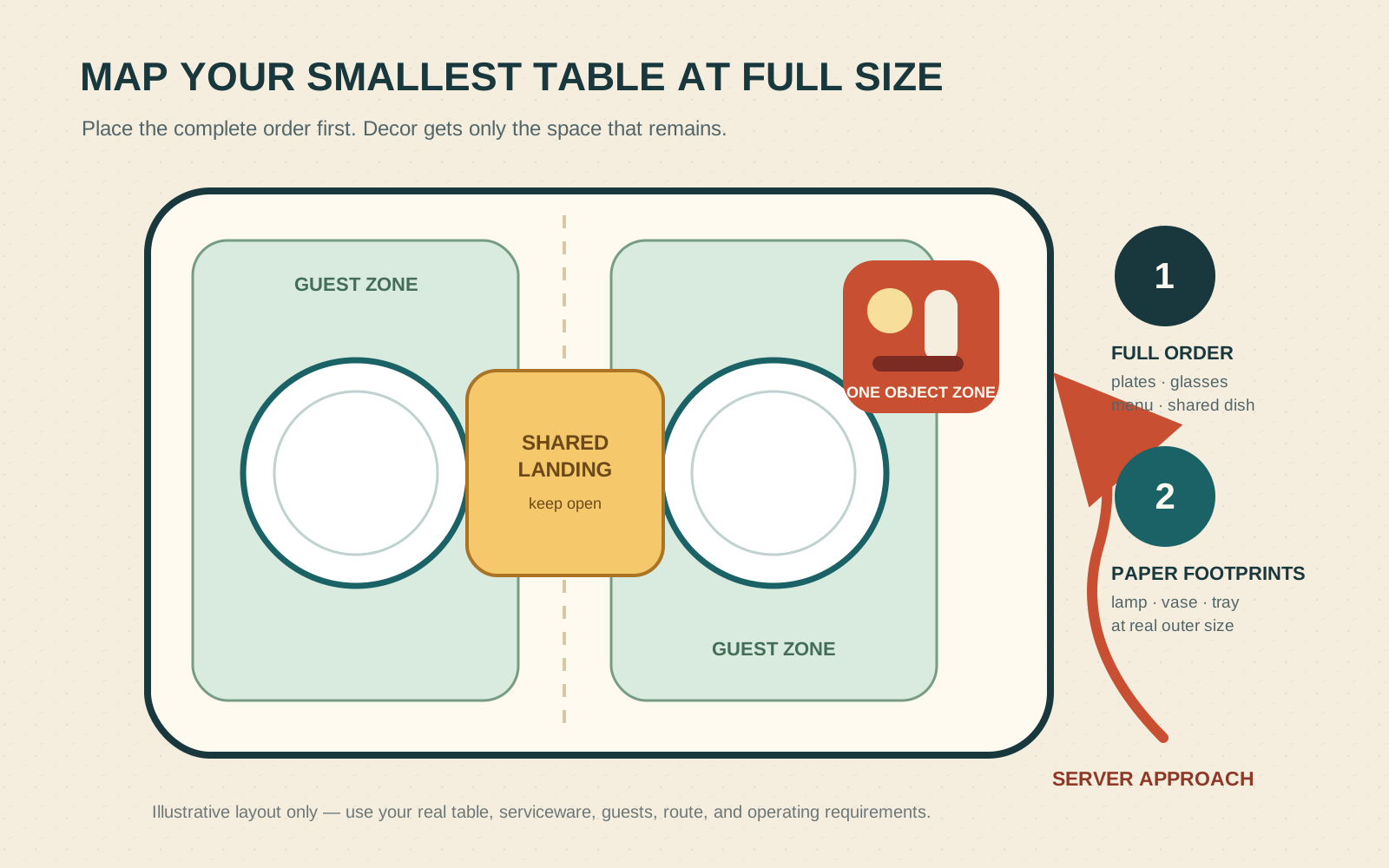
An empty tabletop is generous. A working tabletop contains bodies and belongings as well as crockery:
- the largest dinner plates in your current service;
- water and any routine second glass;
- cutlery, napkins, menus, and condiments;
- the widest shared plate or board commonly ordered;
- a phone, bag edge, or folded reading glasses;
- the server’s hand and a safe landing path.
Set all of that on the smallest table you actually use. If two tables share the same small top but have different bases or banquette conditions, test both. A beautiful arrangement developed on a four-top does not become workable merely because staff squeeze it onto a two-top.
Photograph the loaded table from above and from both seats. Then make simple paper footprints for each proposed object. Paper is more honest than a close product photograph: it shows exactly what the vase, lamp, tray, card, and gaps remove from service.
Give every object one job
Tabletop pieces earn their space by doing a clear job. Most useful jobs fall into four groups:
- Help the guest: table number, reserved card, QR code, allergen prompt, or readable special.
- Support service: condiments, cutlery, or napkins grouped so staff can lift and replenish them efficiently.
- Support atmosphere: one low floral note, one warm light, or one deliberate material accent.
- Protect a routine: a base that catches drips, keeps loose pieces together, or preserves the approved reset position.
If an object cannot name its job, remove it from the trial. If three objects perform one job, test whether a single object can replace them.
This is why a small tray can be more useful than another ornament. It turns several loose items into one reset unit. But the tray is only a grouping device unless its documentation says otherwise; it does not become food-contact equipment because it resembles a serving board.
Reserve one compact object zone
Do not scatter decor through every open patch. Mark one compact zone that guests and staff can learn: for example, near the wall edge of a banquette table or at one end of a communal table. Keep the main shared-food landing area visibly open.
The zone should still work when the table rotates, two loose tables join, a high chair arrives, or the nearest seat changes. Avoid placing the arrangement where it blocks a wheelchair user’s preferred approach, conflicts with a table base, or requires staff to reach across a guest.
One-hand removal is a useful field test. A staff member should be able to lift the complete decorative unit safely with one hand while keeping the other available for the service task. This is not a mandate to make everything tiny: larger centrepieces may be right for a host stand or a communal table that does not turn frequently. It is a reason to keep them off the small, high-turn two-top.
Test the seated conversation line
Sit two people opposite each other and ask them to talk normally. The arrangement should not force either person to lean around it or raise their chin.
Instead of trusting a generic height rule, use the actual vessel and stems. From each seat, raise two fingers at the far diner’s eye line. If the decor occupies that narrow band, shorten the stems, choose a lower form, split one dense arrangement into smaller controlled pieces, or move it off the table.
Repeat the check after the lamp is switched on. A shade can be physically low yet visually dominant if the source is bright in one diner’s eye. The restaurant lighting layers guide explains how to give tabletop light an atmosphere job without asking it to carry the entire room.
For flowers, the operational question is not simply real versus artificial. It is who trims or dusts them, where water is changed, how leaks are caught, and how the approved height is restored. The restaurant floral-arrangements guide covers that routine in detail.
Run the 15-minute service test
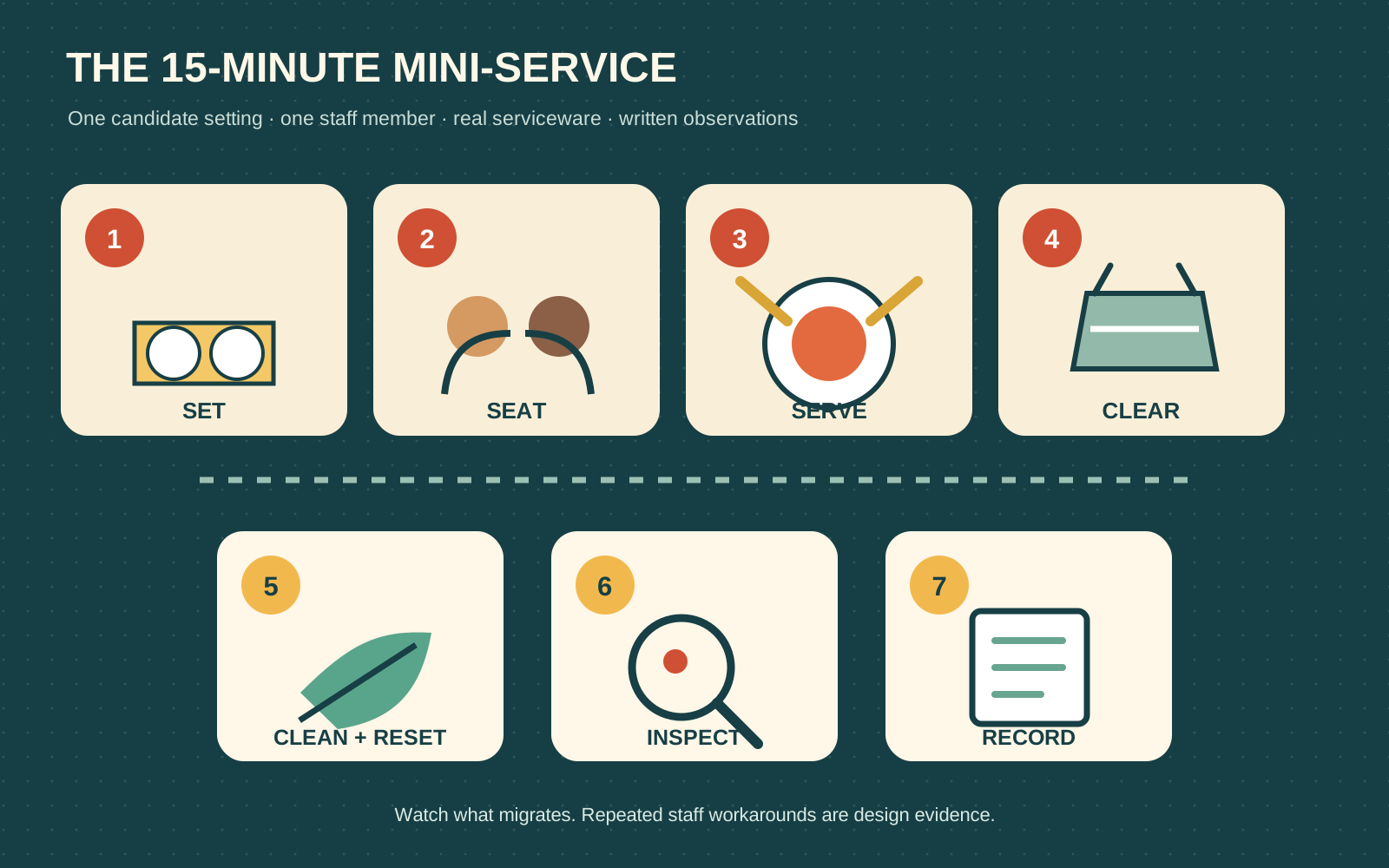
Do this with one candidate setting, one staff member, and the real supplies. Fifteen minutes is an editorial trial window, not a universal performance target.
- Set: build the approved table from its storage position without coaching.
- Seat: place two people, coats, a phone, and the menus as they naturally arrive.
- Serve: land the largest common order and one shared plate; pour water; let both diners reach the condiments.
- Clear: remove used items in the normal sequence without relocating decor to another table.
- Clean and reset: use the venue’s documented cleaning routine and restore every object.
- Inspect: look for rocking, leaks, stains, clouding, loose parts, fingerprints, hot surfaces, tangled chargers, and pieces that migrated.
- Record: note the reset time, number of touches, breakage risks, and what staff changed without being asked.
The most revealing observation is often migration. When two different people move the same object to the same place, treat that as design evidence. Edit the layout rather than training staff to fight it.
Compare hidden work before style
| Element | Useful when | Hidden work | Remove or change it when |
|---|---|---|---|
| Low bud vase | One small gesture supports the room | Water, stems, leaks, replacement | It blocks conversation or sheds into food |
| Artificial arrangement | Consistency matters more than freshness | Dusting, damage, fire documentation where required | It looks dirty under evening light or has no credible material information |
| Portable lamp | Tables need a controlled pool of warm light | Collection, charging, inspection, spares | Runtime is unreliable or guests see glare |
| Display frame | Information changes often | Printing, insert alignment, surface clouding | It is unreadable at night or duplicates another sign |
| Condiment tray | Several operational items must move together | Refilling, base cleaning, weight | It becomes a dumping ground or steals shared-plate space |
| Candle or holder | The venue has an approved flame programme | Authority approval, lighting, extinguishing, wax, storage | Open flame is not approved or the holder becomes hot/unstable |
| Runner or placemat | It protects or acoustically softens a deliberate setting | Laundry, stains, edge wear, alignment | The reset cannot keep it clean and square |
| Sculpture | A low-turn communal table or host stand needs a focal point | Dust, contact, secure storage | It migrates, rocks, or turns the table into a display plinth |
This comparison should happen before colour or finish. A piece that adds thirty seconds to every reset can cost far more in labour and inconsistency than its purchase price suggests.
Keep decoration outside the food-contact grey zone
A decorative bowl, tray, board, or vase should not be assumed suitable for serving food. Ask for intended use, material information, care instructions, and the documentation required in your jurisdiction. If the item will hold exposed food or function as foodservice equipment, source it for that job.
For US readers, the FDA Food Code is a model used by jurisdictions rather than a single nationwide restaurant rule. It distinguishes food-contact and non-food-contact surfaces and addresses cleaning and sanitizing. Your adopted local code and inspector are the working references.
Cleaning chemistry also has to match the surface and the product label. The US EPA’s directions for registered disinfectants explain that the use site, method, dilution, and contact time come from the label. A finish that survives a casual wipe may still haze, lift, corrode, or trap residue under the venue’s actual routine.
Pilot one of each material. Photograph it under the same light before the trial, follow the approved cleaning method repeatedly, and compare it again. Do not invent a harsher chemical stress test that conflicts with either the cleaning-product or decor manufacturer’s directions.
Treat lamps as a fleet, not individual objects
A rechargeable lamp is a small electrical programme spread across many tables. Before buying, decide:
- where units are collected without entering food-preparation space;
- which charger and cable belong to each product;
- how many can charge safely at once in the planned location;
- who checks housings, ports, cables, heat, swelling, and damage;
- how a suspect unit is removed from service;
- where spares live and how charge state is recorded.
The US Consumer Product Safety Commission notes that high-energy batteries need care as a product-and-charger system; its battery safety overview is a useful starting reference. Follow the manufacturer’s instructions and the electrical and fire requirements that apply to your venue.
Use the rechargeable restaurant table-lamps guide to plan runtime, charging, spares, glare, and cleaning before treating the lamp as decor.
Build a combination for the operating model
There is no nine-piece checklist every restaurant should buy. Start with the operating model:
- High-turn counter service: table number or readable message, plus a compact caddy only if guests genuinely need it.
- Daytime café: one low vessel or small arrangement; add a changeable card only when it carries useful information.
- Neighbourhood bistro: one warm light and one restrained living note, grouped only if a base improves the reset.
- Fine dining: clear space often feels more generous than another object. Let tableware, linen, food, and light do the visual work.
- Bar tables: assume glasses and sharing plates will claim every available patch; test a single stable light before adding anything else.
- Communal table: a longer composition can work, but leave repeated open landing points and test conversations across the width.
- Host stand: move the expressive vase or sculpture here, where it can shape arrival without being cleared between covers. The host-stand design guide treats that surface as part of the arrival and queue system.
If the room needs atmosphere more than the table needs another object, use the restaurant wall-decor guide to move visual interest onto a surface with less turnover pressure.
Pilot a small fleet and write the reset
One perfect sample cannot reveal variation between units, charging behaviour, breakage, staff handling, or what happens during a busy close. Pilot enough pieces to cover one small zone through representative services.
At the end, save a one-page reset record:
- straight-on and overhead reference photographs;
- object names, quantities, and storage positions;
- approved lamp scene and charging owner, if applicable;
- flower, water, refill, laundry, or dusting routine;
- cleaning products and methods from the relevant labels;
- damage, leak, heat, battery, and breakage triggers;
- who can remove an item from service;
- replacement source and review date.
The best restaurant table decor is rarely the arrangement with the most personality in an empty-room photograph. It is the one that still looks intentional after the shared plate arrives, lets two people see each other, clears in a calm sequence, and returns to the same position at the next seating.
Load the smallest table. Give every object a job. Run the mini-service. Keep only what earns its footprint.
Keep reading

guest-experience
Restaurant Restroom Cleaning Checklist and Inspection Log
Use this restaurant restroom cleaning checklist for opening, service inspections, supplies, fixtures, floors, waste, incidents, and closing records.

dining-room-operations
Restaurant Dining Room Cleaning Checklist: Turn to Close
Use this restaurant dining room cleaning checklist for table turns, high-touch points, spills, service stations, floors, opening, and close.

food-safety
Restaurant Kitchen Cleaning Checklist for Every Shift
Use this restaurant kitchen cleaning checklist to control opening, between-task, four-hour, closing, and weekly work without vague assignments.