
Restaurant Wall Decor: 10 Options Compared by Cost, Effort, and Reversibility
A practical restaurant wall-decor guide: filter the wall before choosing the object, compare ten formats by operating reality, and test the full composition at actual size.

Restaurant wall décor usually fails in one of two ways. The wall is treated like a shopping cart, so ten unrelated objects arrive and the room becomes visually noisy. Or the team orders one dramatic piece from a cropped product photograph, then discovers that it looks too small above the banquette, reflects a pendant, projects into the aisle, or cannot be cleaned without moving a table.
The useful sequence is the opposite: choose the wall, define its job, test the complete outer composition at full size, and only then choose the format.
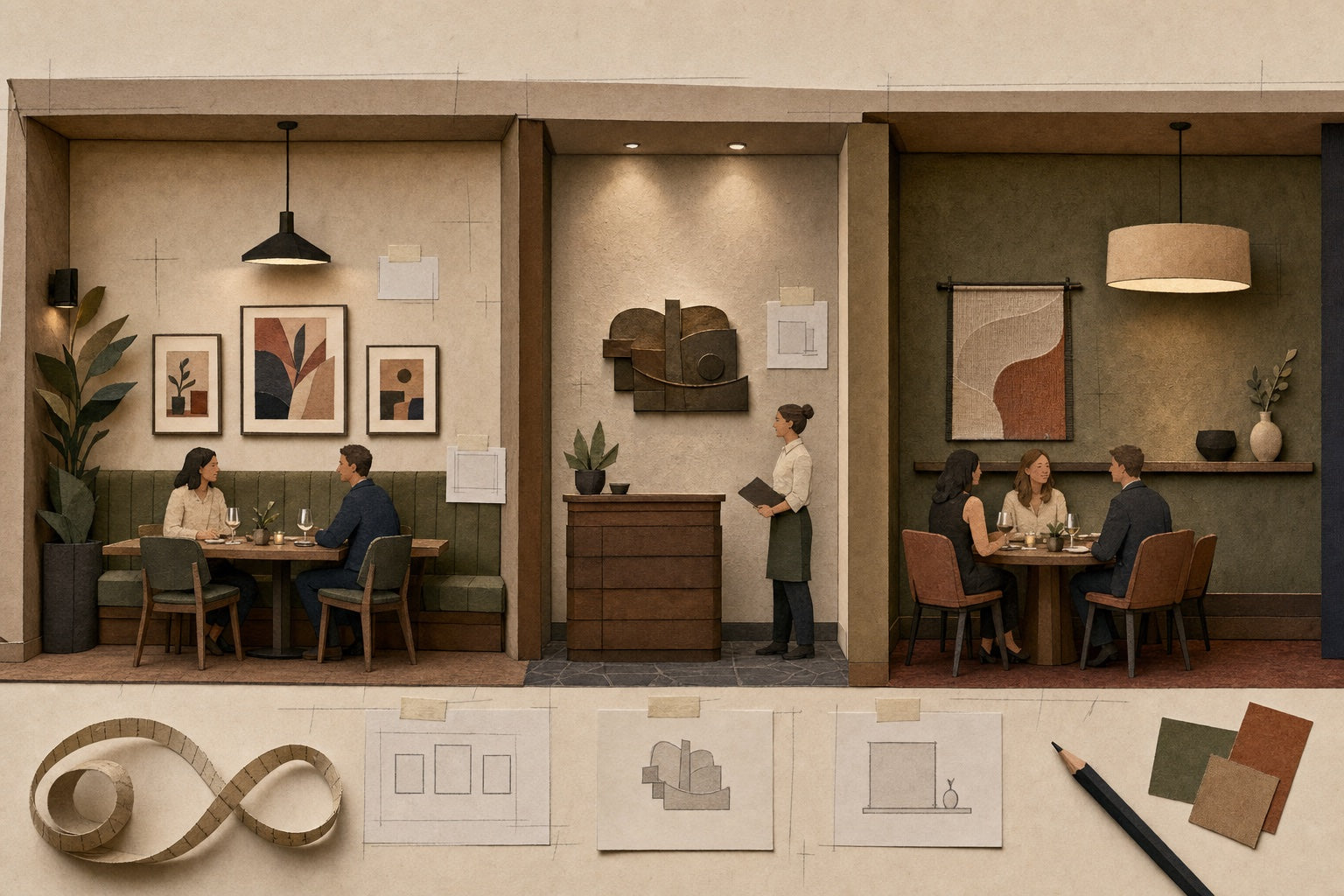
Start with the wall’s job
“Make it less empty” is not specific enough. A wall can perform one clear job:
- hold attention behind a banquette or feature table;
- mark arrival near the host without becoming more signage;
- give depth to the far end of a narrow room;
- carry identity through original art, local material, or a restrained graphic system;
- soften a private room with colour and tactile surface;
- support a display where objects can be secured, lit, and maintained.
Pick one primary job. If the wall must also carry menus, controls, fire equipment, wayfinding, sound treatment, storage, or a service function, put those requirements on the elevation before adding décor.
The wall-art size and height guide provides the detailed seated-sightline method. This article focuses on selecting the format and deciding whether the wall is suitable at all.
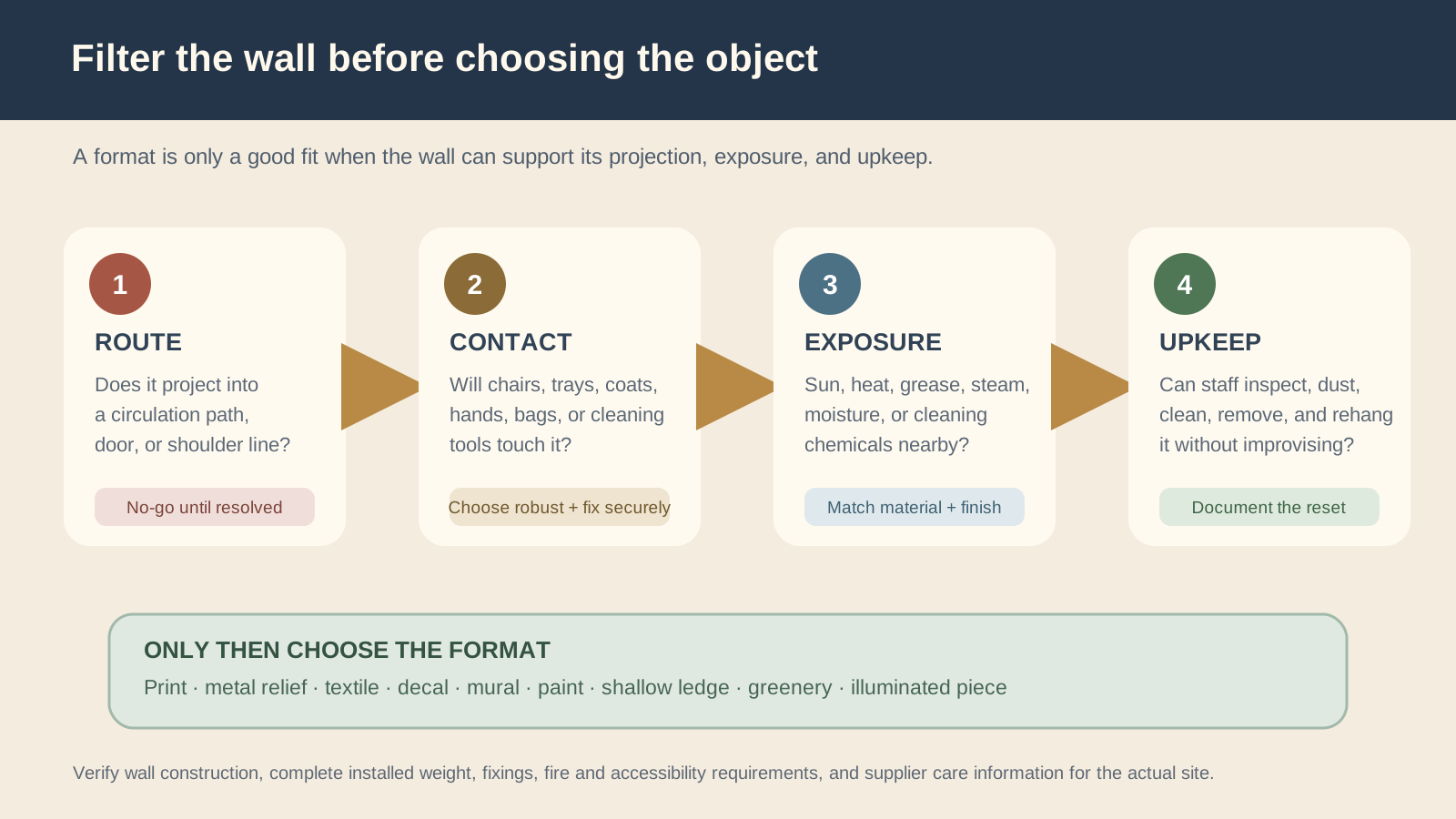
Filter the zone before choosing a format
Walk the wall during service, not only when the dining room is empty.
1. Route
Does the object project into a circulation path, door swing, queue, shoulder line, server turn, or chair pull-out? A shallow object can still become a hazard when it sits at head, shoulder, or cane-detection height.
For US projects, the US Access Board’s guide to protruding objects explains how the ADA Standards apply to objects in circulation paths. The actual project still needs a site-specific accessibility and code review.
2. Contact
Will chairs, trays, coats, bags, hands, cleaning tools, or children touch it? Contact changes the best material, edge, finish, fixing, and maintenance plan. A fragile frame that works above a protected console may be wrong behind a tight banquette.
3. Exposure
Map daylight, heat, steam, grease, humidity, splashes, and the cleaning products used nearby. Paper, textiles, wood, adhesives, coatings, metals, and artificial greenery age differently. Ask the supplier what the finish can tolerate; do not infer durability from a lifestyle image.
4. Upkeep
Can staff inspect, dust, clean, remove, and rehang the complete object without improvising from a chair? Where does it go during maintenance? Who notices a loose corner, cracked glazing, lifted decal, corroded finish, or shifted frame?
Ten wall-decor formats, with the operating reality
1. Framed prints and original work on paper
Framed work is flexible because the composition can grow, move, or rotate. It is also easy to undersize. Three small frames centred above a long banquette often look like samples rather than a decision.
Mock the outer group, including gaps, rather than choosing each frame separately. Check glazing reflections from seated positions and phone photos. The Canadian Conservation Institute’s guidance on caring for works of art on paper notes that light damage is irreversible; valuable or sensitive work needs conservation-aware display advice, not a generic restaurant-lighting rule.
Use the framed-prints guide to compare layout, glazing, weight, and hanging checks.
2. Frameless canvas and rigid art panels
Frameless work can reduce visual edge clutter and avoid glazing reflection. It still has depth, weight, surface vulnerability, and a fixing system. Unprotected edges are often the first part touched or damaged.
Use it on a protected wall where the surface can be dusted according to the maker’s instructions. Verify the substrate, complete installed weight, edge finish, and rear projection before choosing hardware.
3. Metal relief and iron wall art
Metal can hold a large wall with less printed colour and can reveal shadow when lit across its surface. Its risk is projection. Sharp profiles, heavy components, hidden welds, and glossy reflections need more than a product photograph.
The metal wall-art selection guide screens exposure, finish, projection, and fixing. Build a cardboard silhouette at the real depth and inspect it from the walking route before ordering.
4. Textiles and tapestries
Textiles add colour and visual softness without the hard edge of a frame. They also collect dust, respond to light and moisture, and need a documented mounting and cleaning method. “Fabric improves acoustics” is not a valid claim without tested system data.
The Canadian Conservation Institute explains that light damage to textiles depends on intensity, ultraviolet exposure, and duration. Valuable, historic, or sensitive textiles require specialist advice.
Use the restaurant tapestry guide for placement, maintenance, and claims boundaries.
5. Self-adhesive decals
Decals are quick and reversible only when the wall, paint, adhesive, installation, and removal conditions agree. Fresh paint, textured surfaces, heat, humidity, cleaning, and long display periods can change the result.
Test a sample on the actual paint in a discreet location and follow the paint and decal suppliers’ instructions. The wall-decal preflight covers paint cure, adhesion, removal, and full-size viewing.
6. Paint and colour blocking
Paint is often the lowest-object solution: nothing projects, collects dust, or needs individual alignment. It can define a banquette, niche, or entrance with one broad gesture.
The cost is in preparation, closure time, touch-ups, colour shift under service lighting, and returning a rented space to its required condition. Sample a large patch and view it across the trading day. Use the blue restaurant interior guide as a model for testing colour beside food, faces, and real light.
7. Wallpaper, murals, and printed wallcoverings
A continuous pattern can solve scale more easily than a group of small objects. It also magnifies alignment errors, wall defects, seam wear, glare, and damage from chair backs or cleaning.
Ask for the material, adhesive, fire documentation, cleaning method, lightfastness information, wall preparation, removal plan, and repair strategy. Print or project a full-size section where the strongest motif meets furniture and controls.
8. Shallow ledges and open shelving
A shallow ledge lets the team rotate art or a few secured objects without rehanging the wall. A shelf also creates load, projection, dust, and the temptation to keep adding pieces.
Use the restaurant wall-shelving guide to establish wall fixing, installed load, route clearance, and maintenance before styling. Keep shelf objects outside food preparation and places where a bump can send them onto a table or guest.
9. Wall-mounted greenery
Greenery can soften a hard elevation, but living plants add water, pests, growth, and access. Artificial foliage still needs cleaning, inspection, secure mounting, and material review.
Use the restaurant plant-maintenance guide to choose living, artificial, hybrid, or no plant by light and maintenance access. Do not place planters where drainage, soil, tools, or foliage can contaminate food or service items.
10. Illuminated pieces and decorative signage
An illuminated object can mark a destination or make a far wall visible. It also introduces power, driver, cable, control, brightness, cleaning, heat, and electrical questions. A sign that is beautiful at noon may dominate every table after dimming.
Mock the brightness in the final evening scene. Keep cables and power out of routes, coordinate new electrical work with qualified professionals, and ensure required wayfinding and life-safety information remains distinct from decorative signage. Use the nine lighting types guide to give the object a named layer rather than asking it to light the entire wall.
Quick comparison
| Format | Reversibility | Projection risk | Maintenance reality | Strong first zone |
|---|---|---|---|---|
| Framed work | High if fixing and lease allow | Low to medium | Dust, align, inspect glazing and fixings | Protected banquette or private room |
| Frameless panel | Medium to high | Low to medium | Protect surface and edges | Feature dining wall |
| Metal relief | Medium | Medium to high | Inspect finish, welds, and fixings | Large protected wall away from routes |
| Textile | Medium | Low | Dust, light, moisture, and mounting care | Quiet low-contact wall |
| Decal | Potentially high, but test first | Very low | Edge lift, cleaning, removal | Rented or seasonal accent wall |
| Paint | Medium to low | None | Touch-up and repaint | Broad architectural zone |
| Wallpaper or mural | Low to medium | None | Seams, wear, repair, cleaning | Large uninterrupted wall |
| Shallow ledge | Medium | Medium | Load, dust, object reset | Protected display wall |
| Greenery | Medium | Medium | Water or dust, pests, growth, access | Bright protected zone |
| Illuminated piece | Medium | Low to medium | Electrical, brightness, cleaning | Arrival or far focal wall |
This is a planning comparison, not a promise of price or durability. The real wall, material, size, installer, lease, and local requirements decide the result.
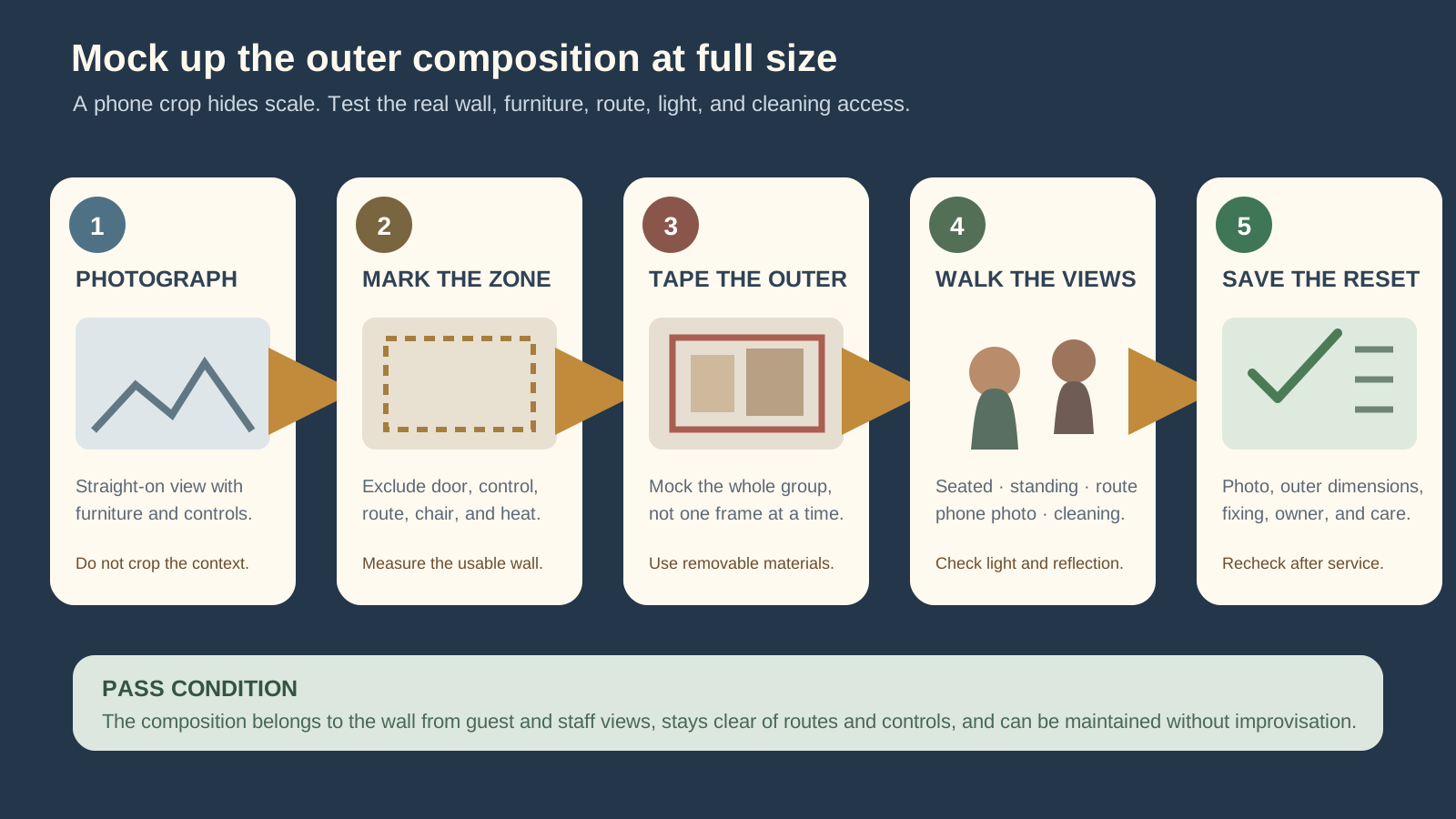
Run the full-size mock-up
Do not approve wall décor from a close crop. Use the actual room.
- Photograph the complete wall straight on. Include furniture, doors, controls, lights, and floor.
- Mark the usable zone. Exclude routes, door swings, controls, chair contact, heat, moisture, and service interference.
- Tape the outer composition. Use removable, wall-safe mock-up material approved for the surface. Include the full group and real gaps.
- Walk the views. Sit at the nearest and farthest table, stand at the entrance, carry a tray past it, take a phone photo, and rehearse cleaning access.
- Save the approved reset. Record the outer dimensions, centre or reference line, complete installed weight, fixing plan, supplier care, owner, and reference image.
Use the restaurant lighting layers field guide to view the mock-up in the actual service state. A warm spotlight cannot rescue a badly scaled composition, and a good composition can still fail under reflected glare.
Rented walls and reversibility
Reversible does not mean permission-free. Before ordering, document:
- the lease or landlord approval requirement;
- the existing wall condition and finish;
- the allowed fixing or adhesive method;
- who repairs holes, paint, paper, or substrate;
- whether wiring or illuminated pieces are permitted;
- the removal, packing, and storage plan.
Photograph the wall before installation. Keep product instructions, approvals, samples, and spare finish information with the wall record. If the wall is valuable, unfamiliar, recently painted, or already damaged, stop testing adhesives and involve the responsible professional.
The wall should make the room easier to read
Good restaurant wall décor is not the maximum amount the wall can hold. It gives the room hierarchy, supports a view or zone, stays clear of the work, and can be maintained without a weekly improvisation.
Choose one wall and one job. Filter the zone for route, contact, exposure, and upkeep. Tape the outer composition at full size. Then select the material that survives the real room—not the thumbnail that looked best on a product page.
Keep reading

guest-experience
Restaurant Restroom Cleaning Checklist and Inspection Log
Use this restaurant restroom cleaning checklist for opening, service inspections, supplies, fixtures, floors, waste, incidents, and closing records.

dining-room-operations
Restaurant Dining Room Cleaning Checklist: Turn to Close
Use this restaurant dining room cleaning checklist for table turns, high-touch points, spills, service stations, floors, opening, and close.

food-safety
Restaurant Kitchen Cleaning Checklist for Every Shift
Use this restaurant kitchen cleaning checklist to control opening, between-task, four-hour, closing, and weekly work without vague assignments.