
Framed Prints for Restaurant Walls: Buying Guide
A practical framed-print specification for restaurants covering glazing, installed weight, projection, secure retention, cleaning access, scale and image rights.

By Resto Glow Studio · Published 3 August 2026 · Last updated 3 August 2026
A frame in a restaurant is a public-room installation, not just a picture choice. Its glazing, total weight, projection, fixing method and cleaning access all change with the wall and its position above seats or circulation routes.
Use this guide to build one repeatable frame specification, then have the installer match its hardware to the actual substrate. The artwork can change later; the safety and maintenance decisions should already be settled.
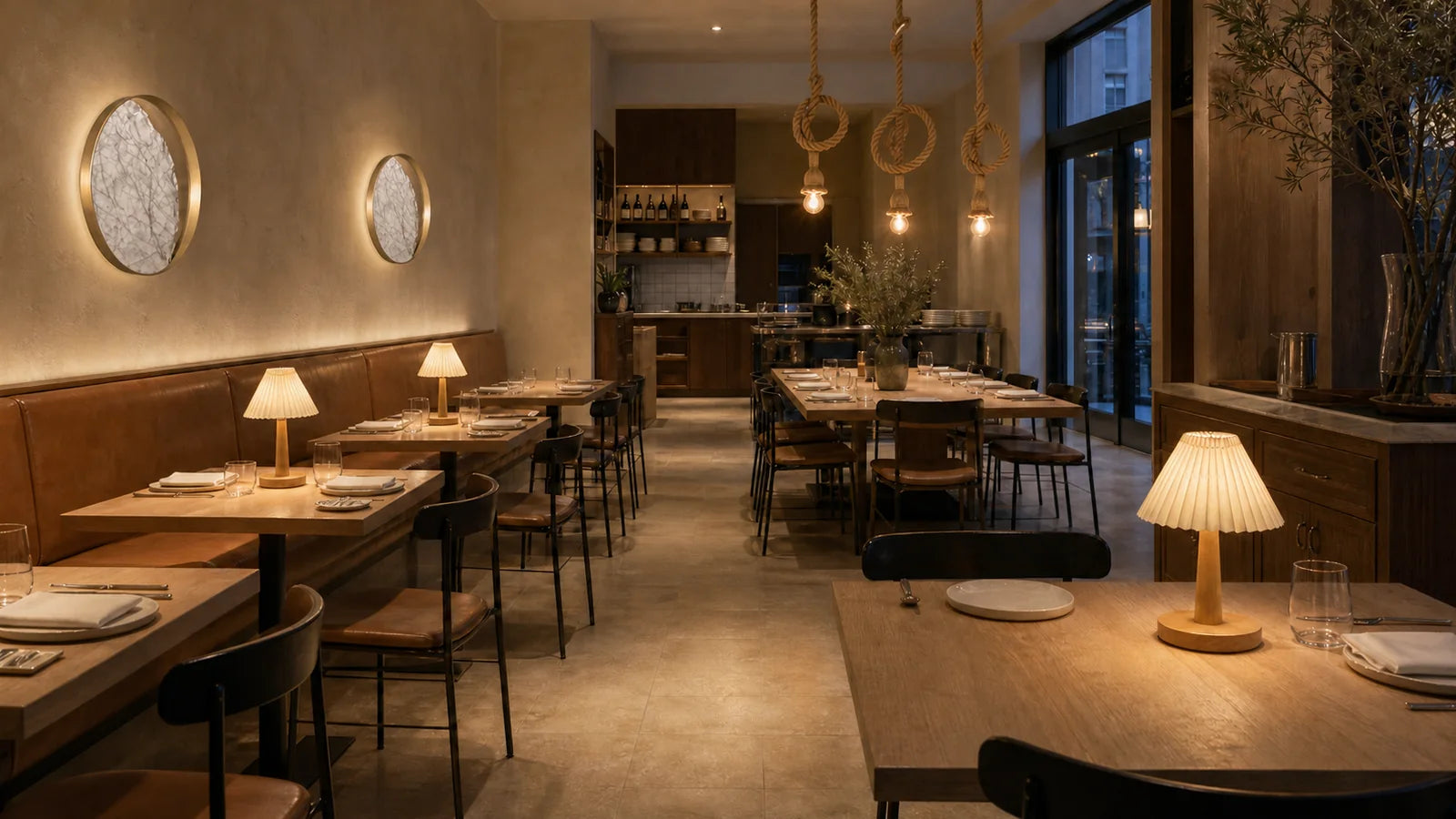
Where framed prints beat canvas and metal
Framing offers three useful capabilities when the location suits paper, backing and glazing.
Fine-detail presentation. Paper, a controlled print process and suitable glazing can preserve small type, line work and photographic detail. Approve a full-size proof from the intended viewing distance before committing to a run.
A controlled border. A mat and repeated frame profile give mixed images a common visual system. This is especially useful for archive photographs, menus and commissioned work collected over time.
Replaceable inserts. A serviceable frame can accept a new print without changing the whole wall layout. Include opening method, replacement labour, print cost and backing condition in the specification; some security frames are not quick-change systems.
Paper, mat board and enclosed frames are poor candidates for grease, steam and frequent impact. Near a pass or dish area, a washable metal or sealed-panel format may be easier to maintain; see metal wall art and tin signs.
Glazing is the decision that matters
If you get one thing right in this post, make it this one. Glazing is a safety spec before it is an aesthetic one.
Consider acrylic where impact or falling fragments are a concern. It is substantially lighter than comparable glass and does not fail in the same shard pattern, though it can scratch and the complete frame can still injure someone if it falls. Size the fixing for the documented installed weight and wall substrate; do not reduce the hardware from a rule of thumb.
Use glass only after assessing position and failure consequence. It resists scratching and can offer excellent optical clarity, but it is heavier and can create sharp fragments. For work above seating or a busy route, discuss safety glazing and retention with the framer and installer rather than relying on ordinary picture glass.
Anti-reflective or non-glare where the lighting hits. This is the one operators discover after install. A pendant or sconce sitting in the reflection path turns a framed print into a mirror from exactly the seats that look at it. Sit in the chairs opposite the wall, at night, with the lights at service level, before you commit to standard glazing.
UV-filtering near storefront glass. It can slow some fading, but it does not make a light-sensitive print immune to daylight. Record the initial condition and rotate replaceable work if uneven ageing matters.
Open-face — no glazing at all — can work for a coating designed to be exposed and cleaned. Keep unsealed paper away from grease, steam and regular touch, and follow the print maker's care instructions rather than assuming every sealed print is washable.
| Position in the room | Glazing | Weight effect | Hanging implication |
|---|---|---|---|
| Above a banquette, booth or chair | Assess acrylic or specified safety glazing | Often lighter than glass | Rated fixing and retention based on installed weight |
| Corridor, queue, restroom, server aisle | Acrylic | Lighter | Two-point plus security fixing within reach |
| High on a feature wall, out of reach | Glass may be suitable after risk review | Heavier | Installer selects rated fixing for the actual substrate |
| Private dining, low traffic | Glass or acrylic based on risk and optics | Product-dependent | Two-point or cleat system, checked on a set schedule |
| Directly under a pendant or sconce | Anti-reflective or non-glare | Neutral | Check the reflection from the seats, at night |
| Within reach of storefront daylight | UV-filtering | Neutral | Rotate pieces to age the run evenly |
| Near a pass, dish area or open kitchen | Product-specific sealed panel or metal may suit better | Product-dependent | Verify the finish against grease exposure and cleaning chemicals |
Frame material and finish by concept
Frames are furniture. Match them to the room's timber, metal and upholstery rather than to the image.
Warm wood
Bistro, brasserie, bakery, anywhere with timber tables and leather seating. A mid-tone wood profile with visible grain disappears into a warm room in the right way — the art reads, the frame does not. Keep the profile chunky enough to hold its own against a heavy table below; a hairline frame in a heavy room looks temporary. See it working across a whole dining room in The Juniper Brasserie.
Minimal wood and acrylic
Cafés, breakfast bars, Nordic and Japandi rooms. A pale wood base with an acrylic face can keep a small display visually quiet. Our Nordic wood-and-acrylic display frame is a tabletop version of that idea: a wood base and a transparent acrylic front for a card, note or small print on a counter, ledge or host stand. The supplier's "6-inch" label is a variant name rather than a guaranteed aperture, so measure the delivered insert space before printing a batch.
Black metal and thin profiles
Chef's counters, wine rooms and modern bars can suit thin black profiles. Repeating one profile, mat colour and outside dimension can give mixed image sources a shared visual system; confirm the chosen profile can carry the glazing and span safely.
Gilded and ornate
Supper clubs, private dining, heritage rooms. Ornate frames need either commitment or restraint — one large gilded piece as the room's anchor, or a densely hung salon wall of them. Two ornate frames on a plain wall look like they were inherited rather than chosen.
Whatever the finish, write one frame specification and repeat it. Record the profile, finish, glazing, mat, backing, security hardware and maximum installed weight. Repetition helps mixed images read as a collection and makes replacements easier to order.
Mat, scale and the sizing math
The mat controls the visual space between image and frame. Mock a wider mat, a narrow mat and no mat at full size; the best choice depends on the image, viewing distance and frame profile. Use suitable, documented materials where conservation or long display life matters.
For the first paper mock-up, Resto Glow starts a single piece at roughly 60-75% of the furniture width below it and tests its visual centre within a 57-60 in above finished floor band. These are composition prompts, not installation standards. Adjust for the actual sightlines, frame projection, controls, required signs and occupied clearance above seating.
Both are guidance, not gospel, and the single-piece placement question has a guide of its own: our wall art size and height guide works through the height decision properly, including the seated-versus-standing conflict this post only summarises.
Lay the whole run out at full scale before drilling. A paper wall mock-up is more reliable than a floor layout for judging seated height, route clearance, switches and reflection paths.
Hanging securely in a public room
A restaurant installation has to account for touch, vibration, cleaning and repeated furniture movement.
Control rotation and lift-off. Depending on the frame and proprietary system, that may mean two direct points, a cleat, or security retention. Specify the hardware as a complete system rather than mixing a frame fitting, wire and wall anchor with unrelated ratings.
Review reachable frames. Where a frame can be touched, ask whether it can rotate, lift off, expose a sharp edge or release its glazing. Use a compatible retention or security system when that review identifies a risk.
Specify the substrate, installed weight and hardware together. A rated anchor is only meaningful for the substrate, edge distance, installation and load direction in its instructions. Have the installer identify what is behind the finish and record the chosen fixing. Do not use adhesive strips above seating or where failure could obstruct a route.
Check route projection. Under the 2010 ADA Standards for Accessible Design §307.2, objects with leading edges more than 27 in and not more than 80 in above the finish floor or ground may protrude 4 in maximum horizontally into a circulation path. A deep shadow box or attached picture light can exceed that limit even when the print itself is flat. Confirm project applicability and local requirements with the designer or authority responsible for accessibility.
Add frames to the premises inspection schedule. Set the interval from access, vibration and hardware condition, and log loose fixings, shifted frames, cracked glazing or water ingress when found.

Display rights and marketing rights are different
In the US, the owner of a particular lawfully made copy may generally display that physical copy publicly at the place where it is located under 17 U.S.C. §109(c). That means a restaurant does not normally need a separate public-display licence merely to hang a lawfully purchased print it owns.
The distinction matters when the image leaves the wall. Scanning it for a menu, reproducing it on merchandise, using the seller's digital file in advertising or printing extra copies involves different rights and may require permission. A subscription, rental, counterfeit copy or contract with specific restrictions can also change the analysis.
Three useful sourcing routes:
Buy a lawful physical print and keep the invoice and product description. If the plan includes reproducing the image in marketing, obtain those permissions separately in writing.
Commission locally. Use an agreement that states who owns the physical work and which reproduction, website, social and campaign uses are included. Paying for a commission does not by itself transfer every copyright.
Frame material the restaurant controls. Original menus, staff portraits and house photography can make the wall specific to the business. For archive photographs or third-party documents, confirm permission and any credit requirement before reproducing them.
This is general US information, not legal advice. Get qualified advice for disputed ownership, imported or counterfeit copies, multi-site reproduction or a broad marketing campaign.
Cleaning and maintenance
Apply an approved cleaner to the cloth rather than spraying the frame. Keep liquid away from glazing edges, joints, mat board and backing.
Acrylic scratches, so use the glazing maker's approved soft cloth and cleaner. Avoid abrasive materials and any chemical the product documentation excludes; coated and anti-reflective surfaces can have different care requirements.
Set a logged inspection interval from the location and hardware. Check for rotation, loose retention, cracked glazing, staining, insects or condensation. If moisture appears inside a frame, remove it from service and have the cause and contents assessed before reassembly.
What we would actually hang
Be honest about our own range here: our frame stock is small-format. The Nordic wood-and-acrylic display frame is a tabletop piece for counters and ledges, and the 3D wooden photo frame is a magnet-format novelty. Neither is the wall frame that goes above your banquette — for that, buy a single frame spec from a framer and repeat it.
What we do carry is wall-scale work to include in a mixed-media mock-up. The African woman canvas, black wildlife canvas print and abstract wall painting can serve as larger anchors beside smaller framed pieces. The solid wood frameless artwork, American retro wood wall hanging and niche-style wall art offer alternative hard-edged formats. Verify each product's finish, cleaning method and fixing before assigning it to a demanding zone.
Where a landlord limits drilling, ask whether a properly specified rail or secured display shelf is acceptable. A wall-mounted display shelf is one format to evaluate, but propped frames still need restraint against sliding or falling. Our wall lights range covers picture-light and sconce formats to test against the chosen glazing from occupied seats.
Warm & Intimate is the range for dinner rooms with wood frames; Bright & Social for café rooms with pale frames and acrylic. See framed work leading a neutral room in The Parchment Bistro. Fitting out twenty-plus pieces to one spec, or the same wall across several sites? Trade projects is the route.
Still deciding on the medium at all? Our comparison of restaurant wall decor options puts framed work beside the alternatives — and the two nearest are covered in full: tapestries for soft texture, wall decals for the renter's graphic option.
Framed print FAQ
Should restaurant art be behind glass or acrylic?
Start with the consequence of impact or a fall. Acrylic is often preferred above seating because it is lighter than comparable glass and does not create the same shard pattern, but the complete frame still needs rated retention. Glass may suit protected positions where scratch resistance and optical clarity matter. Have the framer and installer assess the exact location.
What size framed print should go above a banquette?
As a working rule, a single piece lands at roughly 60-75% of the width of the furniture beneath it, centred lower than gallery height so it composes for a seated guest. Leave real clearance above the seat back — heads and shoulders reach further than you think. Lay the arrangement out on the floor and photograph it before drilling anything.
Can a restaurant hang any print it buys online?
In the US, the owner of a particular lawfully made physical copy may generally display that copy publicly at its location under 17 U.S.C. §109(c). That does not automatically allow the restaurant to scan it, print duplicates or use the image in marketing. Keep proof of lawful purchase and obtain separate reproduction rights when needed. This is general information, not legal advice.
How do you hang framed art securely in a public space?
Use a two-point or cleat system with security retention where a frame can be touched. The installer should identify the substrate, document the complete frame weight and select hardware rated for that exact condition. Add the frame to a logged inspection schedule and respond immediately to movement, cracks or loose fixings.
How many pieces do I need for a restaurant wall?
Do not choose the count from wall length alone. Mark switches, signs, furniture, seated views and circulation on an elevation, then test one large anchor against a grouped layout at full scale. If the images vary, repeating the frame profile, mat and spacing can make the group easier to read.
Specify the image rights, glazing, complete installed weight, projection, retention, cleaning access and replacement method before placing a multi-frame order. See a visual concept in The Parchment Bistro, or browse Warm & Intimate for the room around it.
Keep reading

guest-experience
Restaurant Restroom Cleaning Checklist and Inspection Log
Use this restaurant restroom cleaning checklist for opening, service inspections, supplies, fixtures, floors, waste, incidents, and closing records.

dining-room-operations
Restaurant Dining Room Cleaning Checklist: Turn to Close
Use this restaurant dining room cleaning checklist for table turns, high-touch points, spills, service stations, floors, opening, and close.

food-safety
Restaurant Kitchen Cleaning Checklist for Every Shift
Use this restaurant kitchen cleaning checklist to control opening, between-task, four-hour, closing, and weekly work without vague assignments.