
Holiday Restaurant Lighting Plan: Order by Dependency (2026)
A dependency-based holiday lighting plan: survey power and controls, test lamps and fixtures, confirm dates, install safely and document the final scene.

By Kamrul Hasan Rayhan · Published 3 August 2026 · Last updated 3 August 2026
Holiday lighting has dependencies: power and controls before fixtures, fixtures before lamping, and a full-table test before a room-wide order. Starting the plan early creates time to confirm compatibility and full-quantity availability instead of discovering gaps during installation.
This is a purchase sequence rather than an idea gallery. Resto Glow's planning framework is survey, specify, test, then deploy. The month assigned to each stage must come from your event calendar, supplier confirmations, and any electrical work—not from a universal lead-time claim.
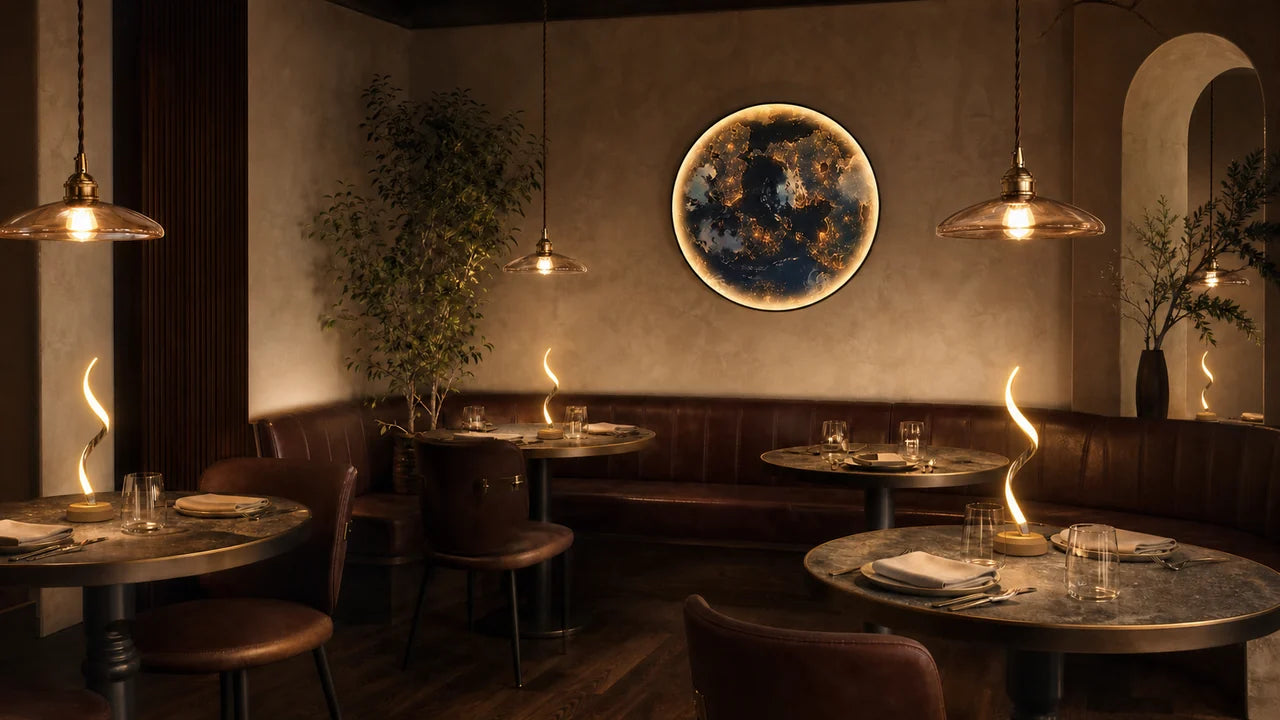
The 10-item order list
In purchase sequence, not importance sequence.
- Pilot table-level light where the service audit finds a gap.
- Test decorative lamps in the actual fixture and control.
- Verify the pendant zones before a room-wide relamp.
- Audit the window and facade view from both sides.
- Resolve a statement fixture's feasibility before ordering it.
- Mock up banquette lighting at seated height.
- Test back-bar and shelf light around real operations.
- Build a counted private-dining kit with a reset plan.
- Assess covered-patio viability, not light alone.
- Document controls, spares and storage before deployment.
This article covers sequence. Use the lighting colour temperature guide for colour appearance, the rechargeable restaurant table lamps guide for a portable-light pilot and how to layer restaurant lighting for the room-level method.
1. Pilot table-level light where the audit finds a gap
Start with representative tables because any fleet affects quantity, charging space, close-down, storage and the lighting scene around it.
Pilot one rechargeable touch table lamp on a dark table and one typical table through a complete service. Check glare from every seat, stability, usable runtime at the chosen setting, cleanability, charge instructions and the space left for plates. Confirm that the product documentation fits the intended commercial location.
If the pilot works, set the par from the number of tables that need the lamp, the observed charging rotation and a documented out-of-service allowance. Ask the supplier to confirm the current full quantity and delivery date in writing before placing a bulk order.
Sizing, run-time and fleet discipline are covered in the rechargeable restaurant table lamps guide. Browse the range in table lamps.
2. Decorative bulbs, in one batch with spares
Changing visible lamps in compatible fixtures can alter the room without replacing the fittings. First confirm lamp base, voltage, wattage limit, dimmer compatibility, output, colour rendering, and whether a qualified person is required for access or electrical work.
Resto Glow's decorative "fireworks" bulbs may suit fixtures designed to show the source. Shortlist only after confirming base, voltage, wattage limit, enclosure restrictions, output, colour rendering and dimmer compatibility.
Test one lamp through the full dimming range and inspect it from seated and standing positions. A visible source can become uncomfortable glare. If consistency between neighbouring fixtures matters, ask the supplier about batch variation, record the exact item identifier and set a spare quantity from critical locations and replacement risk.
Do not order the room quantity until the compatibility and visual tests pass.
3. Re-lamp the pendants over the tables
Before adding a seasonal layer, verify that the existing pendant zones still meet the operating brief.
Colour appearance changes how food, skin tones, greenery and finishes are perceived, but warmer is not automatically better. Sample a compatible lamp in one complete sightline and compare menu legibility, food appearance, faces, glare and finish colour under every service state.
If the existing pendants work, document their lamps and leave them. If a fixture change is genuinely required, it becomes a professional design and installation project involving mounting, circuit, controls, clearances and applicable requirements—not a seasonal bulb order.
The Kelvin reasoning by room type is in our lighting colour temperature guide — read it before you order rather than after. Fixtures are in pendant lights.
4. Audit the window and facade view from both sides
As exterior light falls, glazing can become a mirror for seated guests and an important view from the approach. Photograph it from both sides during the intended service window.
Pilot any LED touch atmosphere light on the intended sill or ledge only after checking stability, heat, cleanability, battery instructions and the product's permitted use. A new wall sconce or facade light is permanent work for a qualified professional and must suit its environment and local requirements.
Make an elevation for each opening and record usable ledges, outlets, heat sources, door movement and guest sightlines. Test one bay at night before repeating it. Keep required exit, emergency and wayfinding lighting separate from the decorative scope.
Browse wall lights. The arrival sequence itself is covered in our restaurant entrance design guide.
5. Resolve a statement fixture's feasibility before ordering
A statement fixture may carry more dependencies than any portable item on this list.
Before requesting a quote, document the ceiling construction, candidate position, dimensions, weight, suspension, electrical supply, controls, access equipment and necessary clearances. A qualified professional should confirm feasibility and approvals. The required-by date must include design, approval, supplier confirmation, installation and testing.
Confirm current availability and delivery with the supplier, then build the schedule backward from the venue's installation deadline. Generic week counts are not used here because the product, site, professional availability and supplier all affect the date.
See chandeliers and Soft & Sculptural for the statement pieces, and The Amber Dining Room for a finished version of the warm December arrival.
6. Mock up banquette lighting at seated height
The banquette wall is prominent, but it is also close to heads, trays and circulation. Treat a sconce proposal as a sightline and clearance problem before treating it as decoration.
Make a full-size paper silhouette of the proposed wall sconce and inspect it from seated, standing and server positions. Check projection, glare, mounting substrate, controls and the accessible route. If greenery is part of the brief, keep it away from heat, sources, equipment and required clearances, and route it through the venue's fire review.
Compare finish samples in the room rather than assuming that two products with the same colour name will match. Order only after the complete wall elevation and professional scope are approved.
Browse wall lights; the seating logic underneath is in our banquette seating design guide.
7. Back-bar and shelf glow
The back bar combines reflective bottles, close-range staff tasks, cleaning chemicals, spills and often limited outlet space. Decorative light must not compromise those operations.
Mock up one shelf section using a product approved for the intended location. Check glare in mirrors and bottles, readable labels, staff task visibility, stability, access for cleaning, heat and battery or cable management. Keep portable lights away from spill zones unless their documentation explicitly supports that use.
If the sample works, count exact positions on an elevation and ask the supplier to confirm the full quantity. If it creates clutter or complicates cleaning, improve the existing bar lighting with a qualified professional instead.
Browse After Dark for the mood, and see the reference room at The Midnight Bar. The full method is in our back bar design guide.
8. A private-dining and event kit that travels
Private rooms and event layouts often have different table plans, control states and reset demands from normal service.
Build a kit from the approved event layouts: tested rechargeable touch table lamps, stability-checked arrangements, sampled textiles and any branded cover detail. If using Santa Claus cutlery holder pockets, first confirm their current availability, care instructions and compatibility with the venue's cutlery handling and sanitation process.
Give the kit a contents sheet, position photograph, charging plan, cleaning owner, damage log and labelled storage. Test the full setup and reset with staff before the first booking, then adjust the par and labour estimate from that rehearsal.
Browse table lamps; the room itself is covered in our private dining room design guide.
9. Assess covered-patio viability, not light alone
A covered patio is not automatically suitable for cold-season service. Weather exposure, enclosure, heating, floor condition, wind, drainage, egress, staffing and local requirements all matter before decorative lighting enters the plan.
If the zone passes that viability review, audit the light during the proposed service period. Test table-level lamps only when the manufacturer documentation supports the actual exposure and temperature. “Covered” does not mean dry, indoor or protected from condensation.
Use the restaurant patio lighting guide for exposure, mounting and suspension, and the end-of-summer patio lighting audit for the installation sequence. Route permanent outdoor and life-safety work through the appropriate professionals.
10. Document controls, spares and storage before deployment
Controls, replacements and storage decide whether the approved scene can be repeated after opening night.
Save the approved control states and who may change them. Have any new dimmer or control assessed for load and compatibility by a qualified professional. Set spare quantities from critical positions, supplier continuity and acceptable outage time. Label storage by zone with an inventory, product identifiers, condition and care requirements.
Photograph each approved zone after installation and again before pack-down. Next year's audit can then compare condition and identify missing or damaged items without relying on memory.
What actually needs lead time, and what doesn't
This is a Resto Glow editorial planning framework, not industry lead-time data and deliberately not a table of week counts.
| Tier | What's in it | What to do about it |
|---|---|---|
| **Professional dependency** | Anything hung, wired, programmed or subject to approval | Define the site scope first; confirm professional availability, product delivery, installation and testing dates |
| **Quantity dependency** | Portable lamps, bulbs, vases, textiles and event-kit components | Approve one sample, confirm the full quantity and delivery date, then set par and spares from the operating plan |
| **Low dependency** | Reusable greenery, small props and consumables with no installation | Still confirm stock, care, placement, storage and the internal deadline; “small” does not mean consequence-free |
Lead times move with the product, quantity, site, season and supplier. Confirm current dates in writing and count backward from the venue's required installation—not from a generic holiday calendar.
An example August-to-November sequence
This example assumes a late-November launch. Replace its months with the real event date, supplier confirmations and professional scope. It is an editorial workflow, not a promise that any item can meet these dates.
| Month | Job | Detail |
|---|---|---|
| **August** | Survey and brief | Photograph zones in service conditions; inventory retained stock; document power, controls, dimensions, exposure and approvals. |
| **September** | Specify and sample | Resolve professional feasibility; test one lamp, portable light, textile and event layout; request full-quantity dates and quotes. |
| **October** | Approve and schedule | Place only approved orders; confirm installation, access, staff rehearsal and contingency dates against written supplier information. |
| **November** | Install, test and document | Complete professional work; test every operating state before the first event; photograph positions and brief the named shift owners. |
Each gate should produce the evidence needed for the next: a survey before a specification, an approved sample before quantity, and completed installation before staff rehearsal.

The holiday order list
One shoppable block, in the order you should buy it.
First, sample the quantity items. Test rechargeable touch table lamps, decorative bulbs and LED touch atmosphere lights in the real positions. Set quantity and spares only after the operating, compatibility and supplier checks pass.
Then resolve permanent fixtures. Mock up options from chandeliers, Soft & Sculptural, wall lights and pendant lights. Obtain the professional site scope before ordering.
Then build the soft kit. Stability-test arrangements, sample textiles under the approved lighting states and check the care and sanitation routine for any Santa Claus cutlery holder pockets.
Start at restaurant lighting, or pick the mood first at restaurant looks — The Amber Dining Room for the warm December dining room, The Midnight Bar for the party-season bar. Ordering for several sites at once? Start at trade projects.
Restaurant holiday lighting FAQ
When should restaurants start decorating for the holidays?
Set the installation deadline from the venue's first holiday event and work backward through staff rehearsal, testing, professional installation, delivery, approval and samples. The example schedule above uses a late-November launch, but the real dates must come from the venue and suppliers.
When should I order restaurant holiday decorations?
Order only after the sample or site scope is approved and the supplier confirms the full quantity and delivery date. Resolve anything hung, wired, programmed or subject to approval first because it has more dependencies; a month name alone does not establish lead time.
How far in advance should you plan holiday decor for a restaurant?
Start early enough to complete six gates: survey, specification, sample, approval, installation and staff rehearsal. Work backward from the first event using written supplier and professional dates. The August-to-November table is one example, not a universal deadline.
What lighting makes a restaurant feel festive?
A scene that fits the room, food, event and service tasks. Test general, accent and table-level layers separately; verify faces, menus, food, glare and routes; then save the approved control state. Our mood lighting guide covers the method.
Do restaurants change their lighting for Christmas?
Some venues save a different control state, some add a tested portable layer and some make no lighting change. Re-lamp only after a compatibility and visual test. Replace a fixture when it solves a documented year-round problem and the professional scope is justified—not simply because the calendar changed.
Next in this series: the September decor swap plan for the changeover run sheet and the back-to-school restaurant audit for earlier family service.
Keep reading

guest-experience
Restaurant Restroom Cleaning Checklist and Inspection Log
Use this restaurant restroom cleaning checklist for opening, service inspections, supplies, fixtures, floors, waste, incidents, and closing records.

dining-room-operations
Restaurant Dining Room Cleaning Checklist: Turn to Close
Use this restaurant dining room cleaning checklist for table turns, high-touch points, spills, service stations, floors, opening, and close.

food-safety
Restaurant Kitchen Cleaning Checklist for Every Shift
Use this restaurant kitchen cleaning checklist to control opening, between-task, four-hour, closing, and weekly work without vague assignments.