

By Kamrul Hasan Rayhan · Published 3 August 2026 · Last updated 3 August 2026
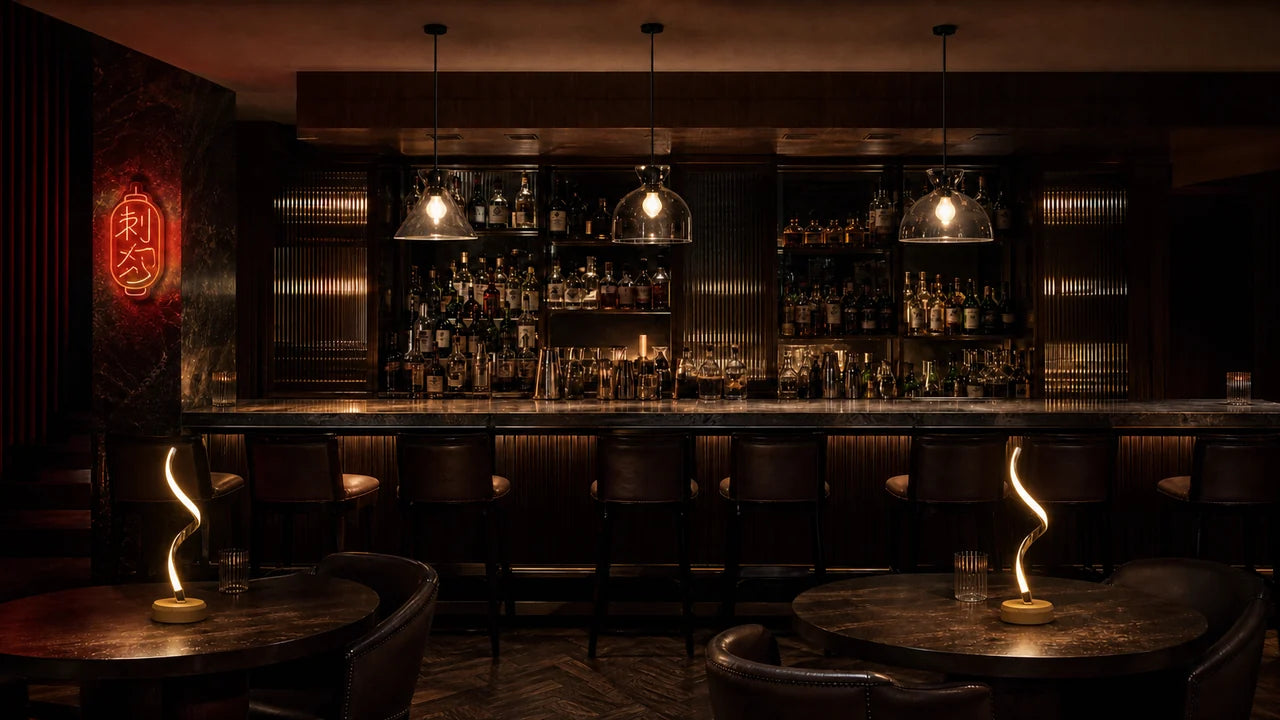
Halloween atmosphere can come from a tested lighting scene rather than an object on every table. The advantage is operational: the same controls, task light, and perimeter light remain useful for private events and winter service after seasonal props are stored.
Plan early enough to test one full table, confirm compatibility, and verify full-quantity availability. Do not infer stock, shipping speed, or supplier attention from search-interest data; ask the supplier directly.
The 10 ideas at a glance
- Build a lower service scene without sacrificing task or route visibility.
- Sample the colour on food, faces and finishes.
- Pilot flame-free table light where it solves a problem.
- Test grazing light on one textured surface.
- Evaluate shadow from an existing sculptural fixture.
- Sample deeper linen against the service routine.
- Stability-test a sculptural arrangement.
- Audit the bar around real staff tasks.
- Mock up one photo corner without blocking operations.
- Control unwanted spill without disabling required light.
This post is the October room. The December one is Top 10 Holiday Lighting Ideas to Order Before October, which is where the ordering sequence for the whole Q4 season lives. The general autumn changeover is Top 10 September Decor Swaps to Prep in August.
1. Build and test a lower service scene
Start with the base scene before adding decorative light. Measure or at least document the existing state so you can restore it after the event.
Save the current control state, then test one lower ambient state in an empty room. Rebuild only where the check identifies a gap: menus, faces, food, payment, staff tasks, steps and routes must remain legible. Darkness is not a design goal in a circulation path.
If the dining room has no usable controls, treat that as an electrical-design project rather than an event-night improvisation. A qualified professional can confirm compatibility, safe load, control locations, and whether new scenes can be added without flicker or failed lamps.
The layering method — what each layer does and in what order to bring it up — is in how to layer restaurant lighting for atmosphere and service.
2. Sample the colour on food, faces and finishes
Seasonal colour can change food, skin tones, artwork and material finishes in ways a product image does not show.
Compare a proposed amber or orange accent with the existing scene on one fully set table. Use representative dishes, menus and people, then take photographs on common phones. Keep or reject the sample from the actual result; neither colour is inherently correct for every room.
If testing a Resto Glow decorative "fireworks" bulb, first confirm that the fixture is designed for an exposed lamp and verify base, voltage, wattage limit, enclosure restrictions, dimmer compatibility, output and manufacturer instructions. Inspect glare from seated and standing views before setting quantity or spares.
The Kelvin reasoning by room type is in our lighting colour temperature guide.
3. Pilot flame-free table light where it solves a problem
This item needs a straight answer rather than a wink.
Whether an open flame is permitted on your tables is a question for your local fire marshal and your insurer — not for a blog. It varies by jurisdiction, by occupancy, by whether the table carries linen, and by what your policy says. We do not publish code numbers, because a number that is right in one city is wrong in the next one and you are the one who carries the consequence. Ask, get the answer in writing, and design around the answer you actually receive.
If open flame is not approved or does not fit operations, pilot a rechargeable touch table lamp or LED touch atmosphere light on the tables that need a layer. Check stability, glare, cleanability, usable runtime, battery condition, charging instructions and place-setting space. Flame-free does not mean maintenance-free or suitable for every surface.
If the pilot works, write the positions, charging schedule, deployment time, close count and damaged-unit process. Browse table lamps; fleet sizing and runtime verification are in the rechargeable restaurant table lamps guide.
4. Test grazing light on one textured surface
Grazing light can reveal relief in brick, plaster, timber or tile, but it can also expose stains, repairs and uneven finish. Test one surface before extending the idea.
Use a temporary sample only on a stable, cleanable position permitted by the product documentation. Keep it away from heat, water, guest reach and service impact. Aim across the surface, then check the effect from occupied seats and the normal route.
Photograph the sample under the intended service state and inspect hot spots, reflections and unwanted spill. A permanent wall-light change belongs in a documented professional scope, including mounting, power, controls and applicable requirements.
Browse wall lights after the sample establishes that the wall is worth lighting.
5. Evaluate shadow from an existing sculptural fixture
A pierced or layered fixture may create a useful ceiling or wall pattern, depending on its optics, lamp and distance from nearby surfaces.
Start with an existing sculptural fixture. Save the normal lighting state, then test whether a lower ambient scene reveals a pattern without losing table or route visibility. Document where the shadow lands and whether it creates distraction or glare.
Do not move, lower or relamp a hardwired fixture as an event-night experiment. Any change requires the fixture instructions, a qualified professional and a review of mounting, electrical compatibility, clearances and sightlines.
Photograph the tested state from representative seats. Browse chandeliers and Soft & Sculptural; ceiling-plane planning is covered in our restaurant ceiling lighting guide.
6. Sample deeper linen against the service routine
Deeper linen can support the palette, but colour alone does not establish suitability for restaurant service.
Build one sample table with the normal glassware, cutlery, service pieces and lighting states. Check colour, drape, knee clearance, movement when guests stand, snag risk and the reset. Tassels or loose edges are a poor trade if they catch on chairs or slow service.
Run a real stain and laundering test according to the supplier's care instructions. Dark fabric may conceal some marks while highlighting lint, detergent residue or fading; only the sample can show what happens in this operation.
Set the par from pieces used per service, laundry turnaround, reserve stock and documented loss. Record the exact dimensions and supplier colour after approval.
Tabletop composition is in our restaurant table setting design guide.
7. Stability-test a sculptural arrangement
An arrangement of branches or dark stems can provide silhouette without a novelty prop, but the complete assembly must pass a table or host-stand test.
Mock up the proposed stems and vessel at full height. Check sightlines, loose parts, stability during a realistic bump, usable table area, cleaning, storage and the shadow under the approved scene.
Do not infer stability or breakage behavior from the material name. Ceramic, glass, metal and resin vessels vary in mass, geometry and finish. Test the complete assembly in its exact location, and move it to the host stand or a protected shelf if it cannot preserve table conversation and service space.
Scale, placement and proportion are covered in our restaurant floral arrangements guide.
8. Audit the bar around real staff tasks
The bar combines reflective bottles and mirrors with close-range staff tasks, spills, cleaning chemicals and limited working space. Decorative light must fit those conditions.
Pilot one shelf section with an LED touch atmosphere light approved for the intended location. Check label readability, staff task visibility, glare in mirrors and bottles, stability, heat, access for cleaning and battery or cable management. Keep portable products away from spill zones unless their documentation supports that exposure.
Test existing pendants and artwork within the complete scene. New hardwired fixtures, controls or mounts require a professional scope. Compare any permanent proposal on year-round value rather than assuming October use justifies it.
Browse After Dark, see it finished at The Midnight Bar and The Nightjar Lounge, and read the method in our bar lighting design guide.
9. Mock up one photo corner without blocking operations
A photo-friendly corner can be useful if it also works as a seat or waiting area and does not interfere with service.
Choose a location outside egress, queuing and server routes. Mock up one canvas artwork and use the existing light first. Take test photographs on several common phones with people of different heights and look for backlighting, glare, deep facial shadow and awkward cropping.
Treat any new sconce as permanent professional work. Sample any cushion for fit, cleanability and the supplier's intended use; a consumer accent cushion is not automatically contract seating. If the venue photographs guests, define consent and retention—especially for images involving children.
Sizing and mounting height for the artwork are covered in our wall art size and height guide — get the height right for a seated guest, not a standing one.
10. Control unwanted spill without disabling required light
Unwanted spill can flatten an event scene, but the corrective action must preserve required work and life-safety illumination.
From occupied seats, record glare or spill from the pass, POS displays, service corridors and open doors. Do not dim a food-check task, alter required equipment, obstruct a view or disable emergency, exit or egress lighting for atmosphere.
Work with the responsible teams on safe options: approved screen settings, shielding designed for the fixture, aiming an adjustable source, repairing a door closer or changing the guest sightline. Photograph the approved state and add it to the pre-shift reference.
Pass-side glare specifically is covered in our restaurant kitchen pass design guide.

Separate reusable assets from recurring spend
This is a Resto Glow editorial inventory framework, not product-life data. Classify items using supplier documentation and the venue's own condition records.
| Reusable asset candidates | Recurring or consumable candidates |
|---|---|
| Approved rechargeable lamps and LED atmosphere lights | Fresh greenery and filler |
| Professionally installed sconces, pendants and sculptural fixtures | Small novelty props |
| Stability-tested vessels | Dated or event-specific print |
| Launderable linens and cleanable artificial arrangements | Consumables and single-use signage |
| Properly mounted art and signs | Damaged or non-cleanable items |
For each candidate, record purchase cost, setup labour, cleaning, storage volume, expected reuse, replacement and disposal. Keep recurring items visible in the annual budget instead of hiding them inside a one-time seasonal order.
The full autumn-to-winter ordering sequence — what to buy in which month so none of it arrives late — is in Top 10 Holiday Lighting Ideas to Order Before October.
The Halloween lighting kit
One shoppable block, in the order you should buy it.
Test light first. Sample a decorative bulb in the actual fixture and control. Pilot rechargeable touch table lamps and LED touch atmosphere lights only in approved positions; set quantity, spares and charging after a complete service test.
Then evaluate permanent fixtures. Use wall lights, Soft & Sculptural and chandeliers as shortlists only after the mock-up establishes a real need and a qualified professional defines the site scope.
Then sample the tabletop and walls. Test textiles through laundering and reset, arrangements for stability and sightlines, wall pieces against a measured mounting plan, and any cushion for commercial suitability and cleaning.
Build the room, not the costume: start at After Dark, or browse the full range in restaurant lighting. See it done at The Midnight Bar and The Nightjar Lounge. Lighting several sites at once? Trade projects.
Restaurant Halloween lighting FAQ
How do you decorate a restaurant for Halloween?
Start by documenting the normal scene. Test one lower ambient state while preserving food, faces, tasks and routes; then sample one colour accent, table-level light or textured-wall effect. Add props only with a placement, cleaning, storage and removal plan.
What lighting makes a restaurant look spooky?
Controlled contrast can create drama, but routes and tasks still need appropriate visibility. Test grazing light on one textured wall or the shadow from an existing sculptural fixture, then inspect food, faces, menus, glare and circulation. Choose colour from the sample rather than a universal amber-or-orange rule.
Can restaurants use real candles for Halloween decor?
Ask the local fire authority and insurer, and get the applicable answer in writing. We do not describe any Resto Glow product as safe near open flame. If testing a flame-free alternative, still check stability, battery condition, cleanability and the manufacturer's permitted use.
When should restaurants put up Halloween decorations?
Set the installation date from the venue's event calendar and work backward through staff rehearsal, professional installation, delivery, supplier confirmation and samples. Generic August order or first-week-of-October installation rules cannot account for the product, quantity, site or supplier.
How do you make Halloween decor look upscale, not cheap?
Use a narrow brief and repeat it: one approved colour accent, one texture, one focal position and a documented lighting state. Test the complete view in daylight and evening service. Restraint comes from limiting the system, not from declaring particular colours or materials inherently upscale.
Next in this series: Top 10 Holiday Lighting Ideas to Order Before October for the December sequence, Top 10 September Decor Swaps to Prep in August for the autumn changeover, and Top 10 Patio Lighting Ideas Before Summer Ends for the last weeks outdoors.
Keep reading

guest-experience
Restaurant Restroom Cleaning Checklist and Inspection Log
Use this restaurant restroom cleaning checklist for opening, service inspections, supplies, fixtures, floors, waste, incidents, and closing records.

dining-room-operations
Restaurant Dining Room Cleaning Checklist: Turn to Close
Use this restaurant dining room cleaning checklist for table turns, high-touch points, spills, service stations, floors, opening, and close.

food-safety
Restaurant Kitchen Cleaning Checklist for Every Shift
Use this restaurant kitchen cleaning checklist to control opening, between-task, four-hour, closing, and weekly work without vague assignments.